Hear From Our Happy Clients
Testimonials coming soon!
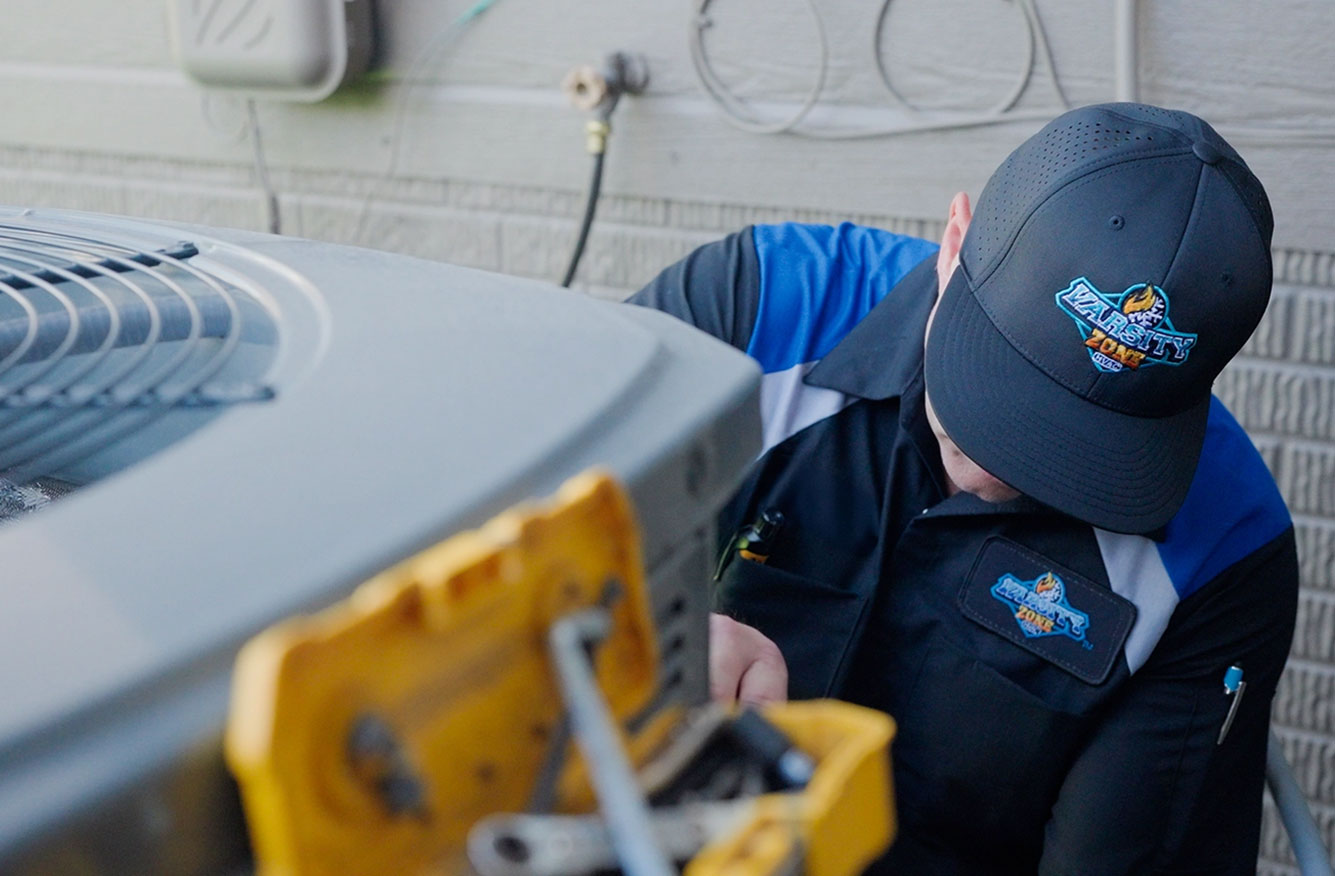
We Bring Our A-Game Every Service Call
Predictive maintenance alerts and the latest tech keep your space comfortable season after season.
You'll never miss a play in your HVAC game with real-time service updates and live tech tracking.
Stay in the lead with our Season Ticket Maintenance Plan – guaranteed peak performance and comfort.
Our All-Star team goes above and beyond to deliver winning results – with a smile every visit.
How Heat Pumps Work
A heat pump uses a refrigeration cycle to move heat between your indoor and outdoor spaces. In cooling mode, your heat pump moves heat out of your home or business. In heating mode, the reversing valve changes the refrigerant flow so the system can move heat indoors.
Because the same refrigeration system works in both directions, heat pump service can involve the compressor, indoor and outdoor coils, reversing valve, expansion device, refrigerant circuit, fans, blower, thermostat, sensors, defrost controls, and auxiliary heat.
Ducted and Ductless Heat Pump Systems
Heat pumps can be configured in more than one way. The type you have affects how conditioned air reaches your space, how your heat pump is controlled, and which components need service.
- Ducted split heat pumps: Your outdoor heat pump works with an air handler or other compatible indoor unit and your ductwork to distribute heated or cooled air.
- Ductless heat pumps: One or more indoor units provide zone-based heating and cooling without a traditional central duct network. Our ductless mini-split services cover those systems in more detail.
- Cold-climate heat pumps: Equipment designed for lower outdoor temperatures can maintain useful heating capacity in colder conditions.
- Dual-fuel systems: A heat pump can work with a compatible furnace as backup or supplemental heat depending on system design and controls.
Ducted heat pumps commonly work with an air handler that contains the indoor coil, blower, controls, and optional electric heat. Our air handler services cover that part of your HVAC system separately.
Heat Pump Diagnostics and Repair
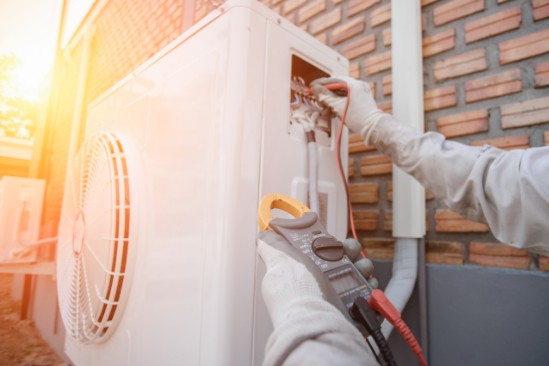
Heat pump diagnosis depends on what you have noticed and whether the problem appears in heating mode, cooling mode, or both. Our technicians may inspect or test:
- Thermostat settings and control signals
- Reversing-valve operation
- Compressor and fan operation
- Indoor and outdoor coil condition
- Refrigerant pressures and temperatures where appropriate
- Electrical components, voltage, and current
- Defrost sensors and controls
- Auxiliary or backup heat operation
- Blower performance, filters, and airflow
- Condensate drainage and controls
If thermostat setup, staging, auxiliary heat logic, or equipment compatibility is part of the problem, our smart thermostat services cover compatible control installation and troubleshooting.
Heat Pump Maintenance
Heat pumps work across more of the year than heating-only or cooling-only equipment, so maintenance needs to account for both modes. A maintenance visit can include:
- Filter and airflow checks
- Indoor and outdoor coil inspection
- Fan and blower inspection
- Electrical connection and control checks
- Refrigerant-circuit inspection
- Condensate drainage checks
- Defrost operation
- Auxiliary heat operation where installed
- Heating and cooling performance checks
Heat Pump Installation and Replacement
Installing or replacing a heat pump requires more than choosing an outdoor unit. Your new heat pump needs to match your heating and cooling loads, indoor unit or air handler, ductwork or zone layout, electrical service, controls, refrigerant requirements, and backup-heat strategy.
Your installation plan can include load evaluation, heat pump selection, indoor and outdoor unit compatibility, line-set requirements, electrical capacity, condensate routing, thermostat setup, airflow, startup, and commissioning.
Cold-Weather Operation, Defrost, and Auxiliary Heat
Modern air-source heat pumps can operate below freezing, including cold-climate models designed to maintain useful heating capacity at lower outdoor temperatures. How your heat pump performs in cold weather still depends on sizing, heat loss from your home or business, equipment capacity, controls, and the backup-heat strategy.
Frost can form on the outdoor coil during heating. The defrost cycle temporarily changes system operation to warm the outdoor coil and remove that frost. Electric heat strips or a compatible furnace can provide auxiliary or backup heat when the system is designed to use it.
Heat Pump Efficiency and System Performance
Heat pump efficiency ratings can help you compare systems, but the rating alone does not determine how your heat pump will perform in your home or business.
- SEER2: A seasonal cooling-efficiency metric used for qualifying central heat-pump equipment.
- HSPF2: A seasonal heating-performance metric used to compare heat-pump heating efficiency.
- EER2: A cooling-efficiency metric based on performance at specified rating conditions.
- Installed performance: Sizing, airflow, ductwork, controls, climate, refrigerant charge, building heat loss, and installation quality all affect real-world operation.
Frequently Asked Questions About Heat Pumps
What is the downside of having a heat pump?
A heat pump can require careful planning around sizing, electrical capacity, controls, defrost, and backup heat. Your performance and operating cost also depend on climate, heat loss from your home or business, electricity rates, heat pump selection, and installation quality. Those factors need to be weighed against the benefit of using one system for both heating and cooling.
How much is a heat pump for a 2,000 sq. ft. home?
Square footage alone is not enough to price or size a heat pump. Heat pump type, your heating and cooling loads, efficiency, ductwork, air handler or other indoor unit, electrical upgrades, line-set requirements, controls, backup heat, and installation conditions all affect project cost. A load and system assessment is more useful than a price based only on floor area.
Which is better, a heat pump or AC?
A central air conditioner provides cooling, while a heat pump can provide both cooling and heating. The better choice for you depends on your existing heating system, climate, energy costs, electrical capacity, comfort goals, heating and cooling loads, and whether you want one system to handle both seasons.
Why don’t contractors like heat pumps?
There is no single industry view that contractors dislike heat pumps. Heat pumps do require careful sizing, refrigerant work, electrical planning, controls, airflow, defrost setup, and backup-heat decisions, so experience with the equipment matters. Modern heat pumps are widely used, including in colder climates when the system is selected and installed for those conditions.
Related Heating & Cooling Services
- Furnace Replacement – Furnace-specific replacement, sizing, venting, installation, and commissioning.
- AC Replacement – Central air-conditioning replacement for properties staying with a cooling-only outdoor system.
- Season Ticket Maintenance Plan – Recurring heating and cooling maintenance for eligible equipment and participating locations.
Explore Our Family Of Brands