
Hear From Our Happy Clients
Testimonials coming soon!
We Bring Our A-Game Every Service Call
Predictive maintenance alerts and the latest tech keep your space comfortable season after season.
You'll never miss a play in your HVAC game with real-time service updates and live tech tracking.
Stay in the lead with our Season Ticket Maintenance Plan – guaranteed peak performance and comfort.
Our All-Star team goes above and beyond to deliver winning results – with a smile every visit.
Humidifier Service and Repair
If your humidifier isn’t performing as expected, our team can help diagnose the issue and explain what we find. Problems can involve the water supply, drainage, mineral buildup, airflow, electrical components, controls, or equipment-specific parts.
Common problems our technicians may investigate include:
- Humidifier is not adding moisture: Possible causes include no humidity call, a closed water supply, solenoid failure, a clogged water panel, a bypass-airflow problem, fan fault, steam-canister problem, control fault, or electrical issue.
- Indoor humidity is too high: Control settings, sensor problems, outdoor-temperature changes, equipment faults, or building moisture conditions can contribute to over-humidification.
- Water leakage or drain problems: Leaks can involve the supply line, valve, distribution tray, cabinet, drain, clogged tubing, cracked components, or installation conditions.
- Mineral or scale buildup: Water quality and operating hours can affect deposits on evaporative media, trays, valves, steam canisters, and related components.
Our technicians can evaluate the system, identify the likely cause, and explain appropriate repair options.
Humidifier Maintenance
Regular maintenance helps keep your humidifier working properly and gives our technicians a chance to catch potential issues early.
Your maintenance needs will depend on your system, how often it runs, and your home’s conditions. Common maintenance tasks can include:
- Water-panel replacement according to equipment requirements
- Steam-canister replacement where applicable
- Scale inspection and cleaning
- Distribution-tray cleaning
- Drain inspection
- Solenoid-valve inspection
- Water-line inspection
- Cabinet cleaning
- Humidistat and sensor testing
- Bypass-damper or fan inspection where applicable
- Seasonal startup and shutdown
- Operating test after maintenance
Maintenance intervals depend on the humidifier, manufacturer instructions, water quality, system use, and operating conditions. For homes with furnaces, it may be convenient to review humidifier upkeep around the same time as seasonal furnace maintenance.
How In-Line Humidifier Systems Work
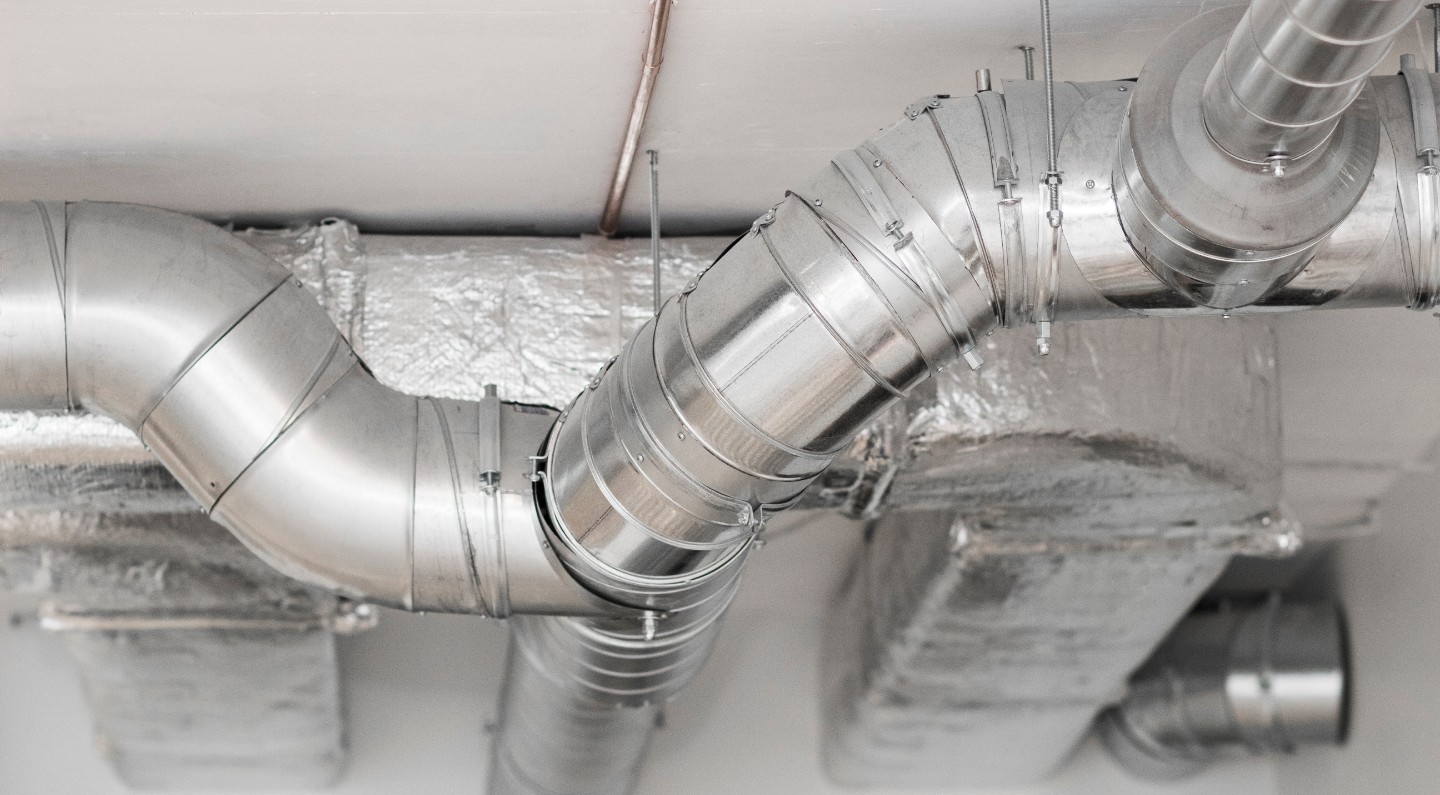
A whole-home in-line humidifier adds controlled moisture to the air as it moves through existing ductwork. Unlike a portable humidifier that adds moisture to one room or a limited area, an in-line system uses the home’s ducted airflow to distribute humidified air to multiple spaces served by the HVAC system.
HVAC Airflow
There are two common ways whole-home humidifiers add moisture. Evaporative models use the air already circulating through your HVAC system to absorb moisture from a wet pad, while steam models create steam and deliver that moisture directly into the air before it reaches your rooms.
Humidity Control
A humidistat or compatible control serves as the system’s thermostat for moisture. Just as a thermostat tells your heating system when to turn on or off, a humidistat monitors indoor humidity levels and signals the humidifier when additional moisture is needed. Some systems can also work with compatible smart thermostat controls, depending on the equipment and control setup.
Water Supply and Drainage
Like many appliances that use water, whole-home humidifiers may require a water connection, control valve, drain, and other water-management components depending on the equipment. These components help deliver water where it’s needed and manage excess water safely.
HVAC System Integration
Whole-home humidifiers are mounted on or connected to ductwork near a furnace or air handler, allowing them to work alongside your existing HVAC system. To operate effectively, they must be compatible with your home’s airflow, available space, power requirements, and control system.
Types of Whole-Home Humidifiers
Whole-home humidifiers vary by humidification method, water requirements, control strategy, maintenance needs, airflow requirements, and HVAC compatibility. Depending on equipment availability and local offerings, options can include bypass, fan-powered, and steam humidifiers. Our technicians can help you understand which option is compatible with your system and home.
Bypass Humidifiers
A bypass humidifier uses the airflow already moving through your HVAC system to add moisture to the air. As the air passes through a water panel, it picks up humidity before being recirculated throughout your home.
Fan-Powered Humidifiers
A fan-powered humidifier uses a built-in fan to move air across a wetted evaporative medium rather than relying only on bypass airflow from the HVAC system.
Steam Humidifiers
Where offered, a steam humidifier creates steam and introduces that moisture directly into the ducted airflow. Steam systems have their own water, electrical, control, drainage, and maintenance requirements.
What Happens During a Humidifier Installation
1. Measure Indoor Humidity
We’ll take a relative humidity reading and talk with you about what you’ve noticed in your home. This gives us a better starting point for understanding your comfort concerns.
2. Select Humidifier Type and Capacity
Our technicians will consider your home, HVAC system, humidity needs, available space, water supply, power, and controls to help determine which type and capacity of humidifier is appropriate.
3. Plan Duct Placement
A suitable location for your in-line humidifier will be selected near your furnace, air handler, and ductwork to support proper airflow, performance, and future maintenance access.
4. Connect Water and Drainage
The water supply, solenoid or steam-system components, drain line, and other water-management parts required by the equipment will be installed. These connections help ensure the system can deliver moisture reliably and manage excess water safely.
5. Complete Electrical and Controls
Our technicians will connect the humidistat, outdoor sensor where supported, control wiring, fan or steam power, and HVAC interlocks required by the selected model, so the system can automatically monitor and maintain comfortable humidity levels throughout your home.
6. Start and Verify the System
Before the installation is complete, our technicians will test the system, confirm all components are working properly, adjust humidity settings, and show you how to operate the humidifier with confidence.
Whole-Home Humidifier Components and Controls
A humidifier has several components that work together to add and control moisture. Our technicians can inspect these components when installing, repairing, or maintaining the system.
Humidifier Cabinet. The cabinet houses the primary humidification components and mounts to or near the HVAC duct system.
Water Panel or Evaporative Pad. Bypass and fan-powered evaporative models use a wetted medium that exposes water to moving air.
Water Supply and Solenoid Valve. The water line and control valve deliver water when the humidifier receives a demand signal.
Drain Line. Many whole-home humidifiers use a drain for excess water, flushing, or steam-system operation depending on the equipment.
Humidistat and Sensors. A humidistat and compatible sensors help monitor indoor humidity and signal the humidifier when additional moisture is needed.
Bypass, Fan, or Steam Components. Depending on the type of humidifier, additional components may be needed to help move air, distribute water, generate steam, and control humidity levels throughout your home. Equipment-specific parts can include a bypass duct and damper, internal fan, distribution tray, steam canister, electrodes, dispersion tube, and related controls.
Indoor Humidity and Condensation
EPA generally describes 30% to 50% relative humidity as an ideal indoor range. Because the right humidity level can change with the seasons, a whole-home humidifier should respond to your home’s conditions rather than maintain one fixed setting year-round. Dry indoor air is often more noticeable during periods of regular heating system use, while excessive humidification can increase condensation risk. During warmer weather, your cooling system also affects indoor moisture as it cools and dehumidifies the air, so humidity concerns can change with the season.
Condensation is a warning sign. If moisture appears on windows, walls, ducts, or other surfaces, reduce humidification and investigate the moisture and surface-temperature conditions.
Frequently Asked Questions About Whole-Home Humidifiers
What is an in-line humidifier?
An in-line humidifier is a whole-home system that works with your existing HVAC equipment to add moisture to the air as it moves through your ductwork. This helps maintain more consistent humidity levels throughout your home.
What is the difference between bypass, fan-powered, and steam humidifiers?
Bypass humidifiers use your HVAC system’s airflow to add moisture to the air, fan-powered humidifiers use a built-in fan to increase airflow through the unit, and steam humidifiers generate steam that is distributed through your ductwork for whole-home humidity control.
What indoor humidity level is too high for a humidifier?
EPA advises against humidifying above 50% relative humidity. Condensation on windows or other surfaces is also a reason to reduce humidification and investigate moisture conditions.
Why is my whole-home humidifier not working?
A humidifier may stop performing properly due to issues with water flow, controls, sensors, airflow, electrical components, or routine maintenance needs. A professional inspection can help identify the cause and restore proper operation.
How often does a whole-home humidifier need maintenance?
Maintenance requirements vary by equipment type, water quality, and system usage. Regular inspections and maintenance can help identify scale, drainage, control, and component conditions that may affect humidifier operation.
Related Indoor Air Quality & HVAC Services
- Indoor Air Quality – Filtration, ventilation, and other solutions that can work alongside humidity control.
- Dehumidifiers – Whole-home moisture control for excessively humid conditions.
- Air Handlers – Airflow and indoor HVAC equipment that can work with whole-home humidifiers.
- Heating Services – Heating systems and services related to winter comfort and humidity.
- Smart Thermostats – Compatible HVAC controls for temperature and connected-system functions.
Explore Our Family Of Brands