

Hear From Our Happy Clients
Testimonials coming soon!
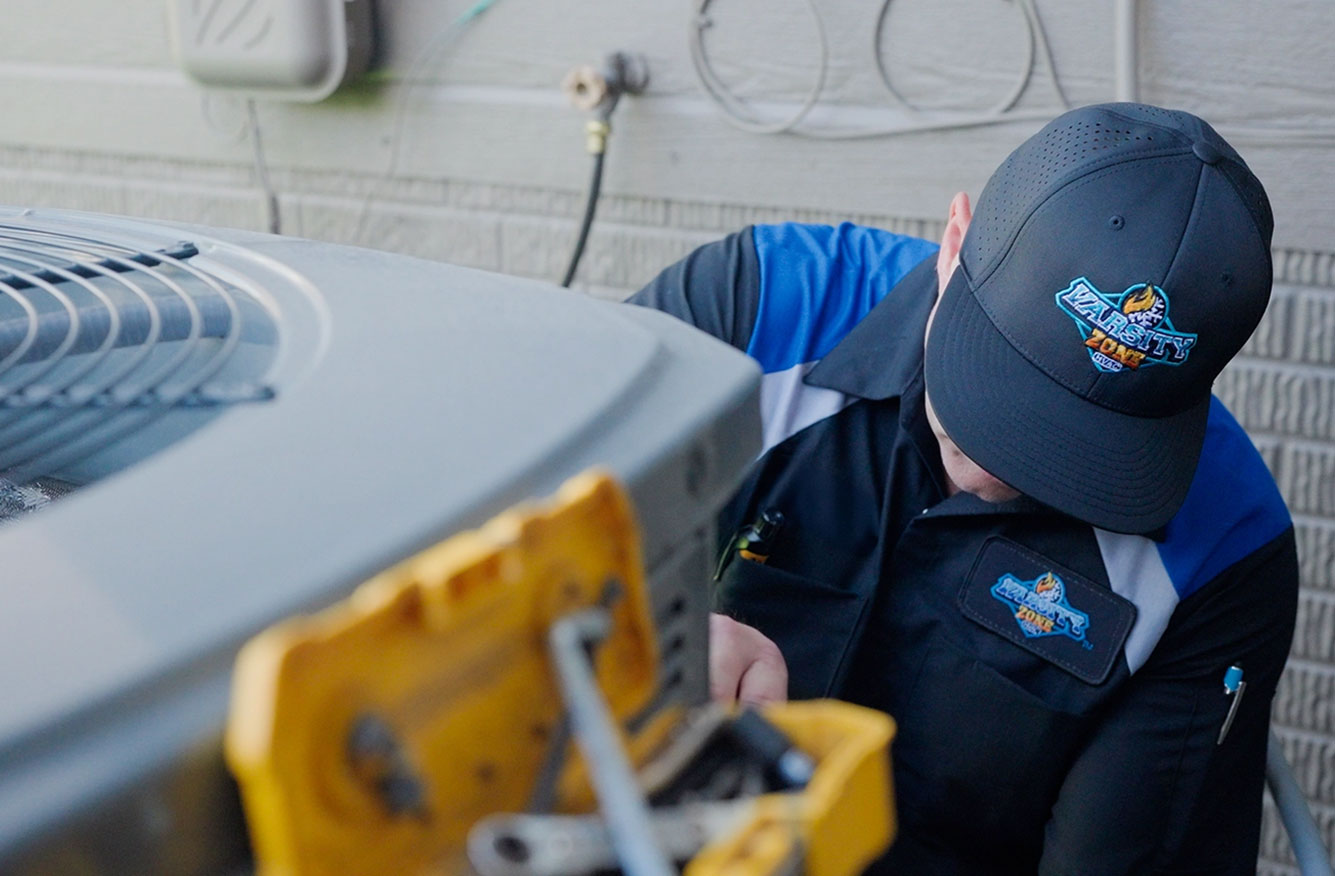
We Bring Our A-Game Every Service Call
Predictive maintenance alerts and the latest tech keep your space comfortable season after season.
You'll never miss a play in your HVAC game with real-time service updates and live tech tracking.
Stay in the lead with our Season Ticket Maintenance Plan – guaranteed peak performance and comfort.
Our All-Star team goes above and beyond to deliver winning results – with a smile every visit.
Indoor Air Quality Assessment
An HVAC-focused assessment can look at the parts of your heating and cooling system that affect air movement, filtration, moisture, and equipment condition. Depending on the concern, that may include:
- Filter type, fit, and condition
- Airflow through the HVAC system
- Indoor humidity
- Visible moisture around HVAC equipment
- Condensate drainage
- Ventilation equipment where present
- Installed air-cleaning equipment
- Humidification or dehumidification needs
- Combustion concerns that fall within HVAC service scope
An HVAC visit is not the same as laboratory testing for every possible pollutant. Concerns such as radon, asbestos, lead, major mold contamination, or specific chemical exposure may require specialized testing or remediation outside normal HVAC service.
Filtration and Air Cleaning
HVAC filters capture particles from air moving through the system. Filter efficiency matters, but so do filter size, fit, replacement timing, and the amount of resistance your HVAC system can handle without restricting airflow.
UV air treatment addresses a different part of indoor air quality. HVAC UV-C systems can expose susceptible microorganisms to germicidal ultraviolet energy under the right design and operating conditions, but they do not replace filtration or required ventilation.
Humidity Control
Too little or too much moisture can affect comfort and building conditions. If your indoor air is consistently dry, an in-line humidifier can add moisture through a compatible HVAC system. If humidity stays high, a whole-home dehumidifier can remove moisture beyond what normal cooling operation provides.
Humidity equipment should be selected and controlled for the building rather than used to mask leaks, groundwater intrusion, or other bulk moisture sources.
Ventilation, Source Control, and HVAC Condition
Air cleaning is only one part of indoor air quality. Some concerns are better addressed by reducing the pollutant source, improving ventilation, correcting moisture problems, or maintaining the HVAC system.
Your air handler, blower, filters, coils, drains, and duct connections can all affect how air moves through the building. HVAC maintenance can also uncover dirty components, drainage issues, or airflow conditions that may contribute to an indoor air concern.
What Indoor Air Quality Equipment Can and Cannot Do
No single HVAC product fixes every indoor air quality concern. A filter cannot correct a plumbing leak. A dehumidifier cannot remove a pollution source. UV-C equipment does not capture dust and pollen. Good recommendations depend on the actual condition you are trying to address.
That is why the starting point should be the concern itself, followed by the HVAC conditions that can reasonably influence it.
Frequently Asked Questions About Indoor Air Quality
Is there a way to check indoor air quality?
Yes, but the right method depends on what you are trying to measure. An HVAC-focused assessment can review humidity, filtration, airflow, ventilation equipment, condensate, and visible HVAC conditions. Specific pollutants such as radon, carbon monoxide, mold, or volatile organic compounds may require dedicated monitors, testing methods, or qualified specialists.
What are the symptoms of bad indoor air quality?
Indoor air concerns can be associated with irritation, headaches, coughing, congestion, unusual odors, or discomfort, but those symptoms are not specific enough to identify an air-quality problem on their own. If you are experiencing persistent or serious health symptoms, seek medical advice while also investigating possible environmental sources.
What is good indoor air quality?
Good indoor air quality generally means the space has appropriate ventilation, controlled moisture, low levels of harmful pollutants, suitable filtration, and HVAC equipment that is operating and maintained properly. The exact conditions depend on the building, occupants, activities, and local environment.
How can I tell if the air in my house is making me sick?
It can be difficult to link symptoms to one indoor source without proper medical and environmental evaluation. If symptoms improve when you leave the building or several occupants notice similar problems, that can be useful information, but it is not a diagnosis. Serious symptoms or suspected carbon monoxide exposure need prompt medical or emergency attention.
Related HVAC Services
- Air Handlers – Indoor HVAC equipment that affects airflow, filtration, coil condition, and condensate management.
- AC Maintenance – Preventive cooling service that can address filters, coils, condensate, and airflow conditions.
- Smart Thermostats – Connected controls that can support temperature scheduling and compatible HVAC functions.
Explore Our Family Of Brands