Hear From Our Happy Clients
Testimonials coming soon!
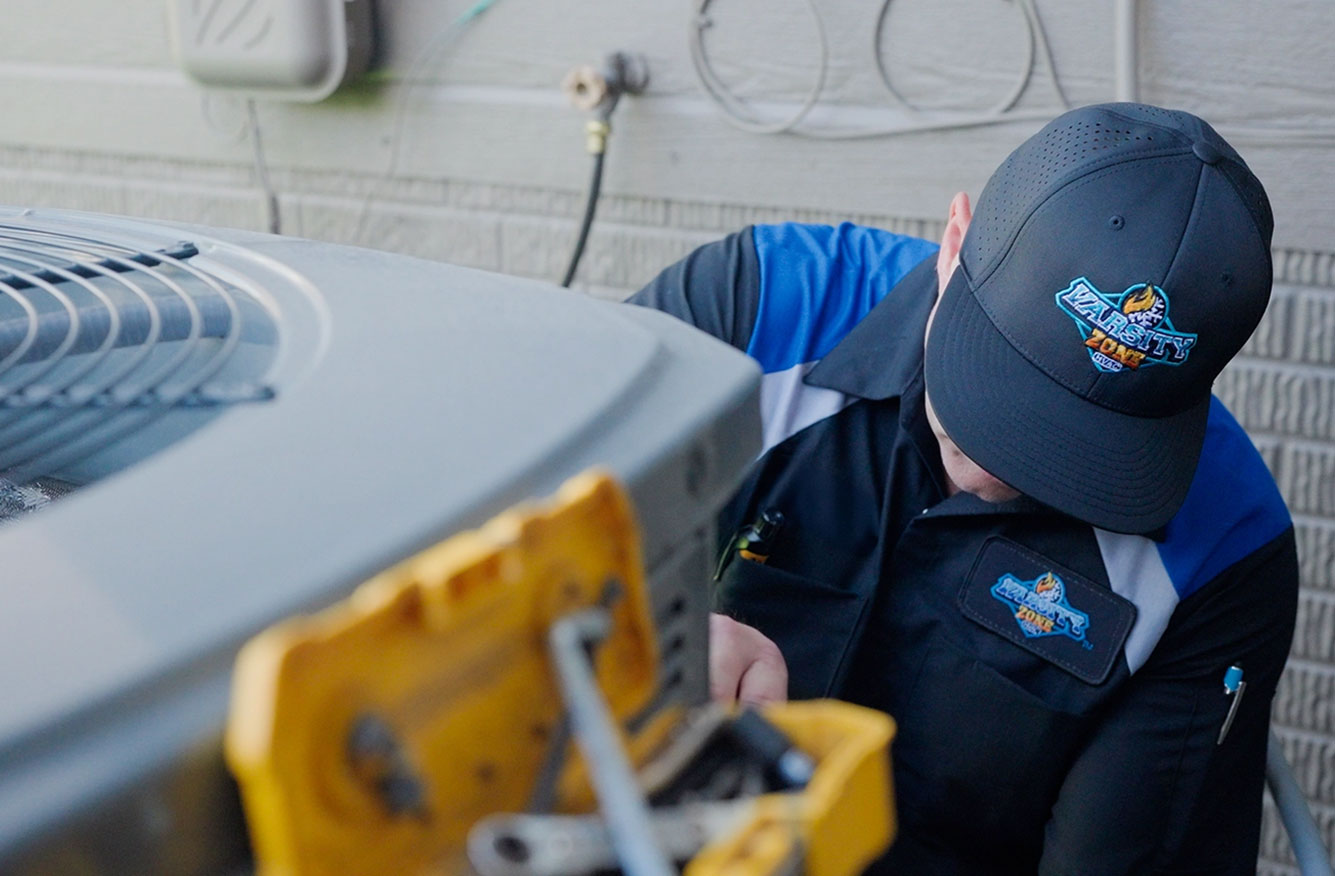
We Bring Our A-Game Every Service Call
Predictive maintenance alerts and the latest tech keep your space comfortable season after season.
You'll never miss a play in your HVAC game with real-time service updates and live tech tracking.
Stay in the lead with our Season Ticket Maintenance Plan – guaranteed peak performance and comfort.
Our All-Star team goes above and beyond to deliver winning results – with a smile every visit.
Furnace Replacement Assessment and Sizing
A replacement furnace should be selected for the building as it is today rather than automatically matching the old equipment.
- Heating load: Building size, insulation, windows, air leakage, layout, occupancy, and local design conditions can affect how much heat the property needs.
- Existing ductwork and airflow: Supply and return paths, blower requirements, duct condition, and static pressure can affect how the replacement furnace performs.
- Fuel or electrical service: Gas piping, electrical capacity, disconnects, and other utility requirements need to match the selected equipment.
- Venting and combustion air: Gas furnaces may require specific venting, intake, chimney, or condensate arrangements depending on the furnace type.
- Controls and thermostat: Staging, modulation, blower operation, communicating controls, and other features need compatible controls.
Residential projects may use recognized load-calculation and equipment-selection methods such as ACCA Manual J and Manual S where appropriate. Square footage alone is not enough to size a furnace correctly.
Choosing a Replacement Furnace
The best fit depends on the building, fuel source, heating load, efficiency goals, controls, airflow requirements, and the rest of the HVAC system.
- Gas or electric operation: The existing energy source and building infrastructure affect which furnace types are practical.
- AFUE: Annual Fuel Utilization Efficiency is used to describe how efficiently a furnace converts fuel into usable heat over a heating season.
- Single-stage, two-stage, or modulating operation: Different furnace designs can provide different levels of heat output and control.
- Blower technology: Blower configuration affects airflow and can influence compatibility with central air conditioning and other equipment.
- Thermostat and controls: The control system must support the furnace features being installed. Our smart thermostat services cover compatible control installation and setup where needed.
Furnace Installation Requirements
Installing the furnace is only one part of the replacement. The new equipment also has to connect correctly with the ductwork, controls, fuel or electrical service, venting, condensate system, and any shared cooling equipment.
- Duct transitions and airflow requirements
- Gas piping or electrical connections as applicable
- Venting and combustion-air requirements for fuel-burning furnaces
- Condensate drainage for condensing furnaces
- Thermostat and low-voltage control connections
- Filter access and service clearances
- Compatibility with the indoor coil and central cooling system where applicable
Furnace Installation and Commissioning
1. Confirm the replacement plan: Review the selected furnace, heating load, controls, airflow, ductwork, fuel or electrical requirements, and installation conditions.
2. Remove the old equipment: Disconnect and remove the existing furnace and the components being replaced.
3. Install and connect the new furnace: Set the equipment and complete the required duct, fuel or electrical, venting, condensate, thermostat, and control connections.
4. Start and configure the system: Set up the controls and begin the required startup checks.
5. Check heating operation: Verify the relevant temperature rise, airflow, staging or modulation, safety controls, venting, combustion conditions where applicable, and thermostat response.
6. Review operation with you: Explain the controls, maintenance needs, and the information worth keeping for future service.
Furnace Efficiency and System Compatibility
A higher efficiency rating is only one part of furnace performance. Sizing, installation, ductwork, blower setup, thermostat controls, building characteristics, weather, and operating habits can all affect comfort and energy use.
A furnace also often shares airflow and ductwork with central air conditioning. Replacement planning should account for the indoor coil, blower capacity, cabinet dimensions, controls, and other system relationships rather than treating the furnace as an isolated appliance.
What Happens After Furnace Installation?
Startup and commissioning help confirm that the installed furnace responds correctly under heating conditions. Depending on the equipment, our technicians may check thermostat response, heating stages, temperature rise, airflow, safety controls, venting, ignition, combustion conditions, and condensate drainage.
Once the new furnace is in service, scheduled furnace maintenance can help inspect the equipment, safety controls, airflow, and other operating conditions over time.
Furnace Replacement Financing
Financing may be available for qualifying furnace replacement projects. Approval, rates, payment terms, and other conditions depend on the financing option available through the participating Varsity Zone HVAC location. Ask the local office for the current financing details that apply to your project.
Frequently Asked Questions About Furnace Replacement
What is the typical cost of replacing a furnace?
Furnace replacement cost varies with furnace type, capacity, efficiency, installation complexity, duct or vent changes, fuel or electrical requirements, permits, and local labor. A replacement evaluation gives a more useful project price than a national average because the installation conditions can change the total substantially.
What is the typical lifespan of a furnace?
Many furnaces remain in service for roughly 15 to 20 years, but there is a wide range. Equipment type, installation quality, maintenance, operating hours, climate, and repair history all affect useful service life. Age should be considered with condition rather than used as the only reason to replace a furnace.
Should I replace my 25-year-old furnace?
A 25-year-old furnace deserves a careful condition assessment, but age alone does not make the decision. Heat-exchanger condition, safety, repair history, reliability, efficiency, parts availability, heating performance, and the cost of continued repairs all matter.
Is a 25-year-old furnace safe?
Age by itself does not determine whether a furnace is safe. A professional inspection should look at the equipment condition, heat exchanger, combustion and venting on fuel-burning systems, electrical components, safety controls, and other conditions that affect operation.
What if you can’t afford a new furnace?
Start by confirming whether replacement is actually necessary and what the project will involve. Financing may be available for qualifying replacement projects, with approval and terms depending on the option offered through the local Varsity Zone HVAC location.
What size furnace do you need for a 2,000 sq. ft. house?
Square footage alone cannot determine the right furnace size. Insulation, windows, air leakage, ceiling height, layout, local winter design conditions, ductwork, occupancy, and other building factors affect the heating load. Proper sizing should be based on the building rather than a simple BTU-per-square-foot rule.
Related Heating & HVAC Services
- Heat Pump Services – Heating and cooling systems that may be considered as an alternative or part of a dual-fuel setup.
- Air Handlers – Indoor airflow equipment and compatible HVAC components that can affect system integration.
- Season Ticket Maintenance Plan – Recurring heating and cooling maintenance through the Varsity Zone HVAC maintenance program.
Explore Our Family Of Brands