
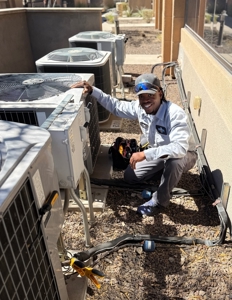
The Post-Monsoon HVAC Health Check for Phoenix-Area Homes
By early September, Arizona homeowners can finally see the edge of the long cooling season. Afternoon temperatures still demand air conditioning, but the nights begin to ease, summer travel winds down, and the first hint of cooler weather appears. The calendar has not fully released us from monsoon season, either. The National Weather Service defines the official period as June 15 through September 30, which means another storm, dust wall, power interruption, or humid stretch can still arrive before the season closes.
This is also the best time to find out what the summer did to your HVAC system. An air conditioner can keep the house comfortable while a capacitor weakens, a coil becomes increasingly coated with dust, a drain begins to slow, or an electrical connection starts showing heat damage. Operation is not the same thing as condition. A car can reach the driveway with the warning light on; the fact that it arrived does not make the warning decorative.
A post-monsoon HVAC health check is a disciplined review of performance, physical condition, and developing risks after the hardest operating months of the year; it is not a pretext to replace working equipment. The goal is to correct small problems, document items that can be monitored, and make any larger decision while the house is comfortable and the schedule is still yours.
September Is the Diagnostic Window
Peak summer forces rushed decisions. When an air conditioner stops during a 112-degree afternoon, the homeowner needs cooling restored, the technician has a packed schedule, and equipment availability matters more than leisurely comparison. September changes the tempo. The system is still running often enough to test properly; a failure is less likely to turn the house into an oven before dinner.
That combination makes early fall the right time for diagnosis. A technician can evaluate cooling performance under a meaningful load, review what happened during summer, and identify work that should be completed before the next heat cycle. The homeowner has time to ask questions, compare repair and replacement economics, and schedule nonemergency work without accepting the first available solution out of desperation.
The timing also creates a clean dividing line in the service history. Instead of reaching next May with a vague memory that the back bedroom seemed warm in August, you can record what the system did, what was measured, what was corrected, and what should be watched. That record becomes more valuable as the equipment ages because it replaces guesswork with trends.
Begin With What the System Did, Not How Old It Is
Equipment age matters; it is not a diagnosis. A twelve-year-old system that held temperature, maintained normal energy use, drained correctly, and needed no summer repairs presents a different risk than a seven-year-old system that ran continuously, tripped breakers, leaked refrigerant, and left two rooms uncomfortable. The post-season review should begin with evidence.
Review thermostat and utility history
Start with the thermostat application, utility portal, and any service invoices from the past six months. Look for changes, not isolated numbers. A single high bill may reflect weather, guests, a lower thermostat setting, a rate-plan change, or a pool pump that developed an ambitious work ethic. A steady rise in cooling runtime under similar conditions warrants a closer look.
Clues worth noting include unusually long cycles after sunset, repeated alerts, sudden gaps in thermostat data, large differences between indoor setpoint and actual temperature, or frequent starts and stops. Smart thermostats can help organize this history; they cannot tell you why the pattern changed. They report symptoms. The cause might be airflow, a sensor, a dirty coil, duct leakage, refrigerant charge, electrical performance, or the building itself.
Review summer bills in the context of APS energy-saving guidance or the rate plan used by your utility. Compare total kilowatt-hours when possible, not only the dollar amount. Rates and fees can move even when household consumption does not.
Listen to what the house is telling you
Walk through the home while the system is operating. Notice whether one room takes longer to recover, a return grille whistles, a supply register has become noisy, or airflow feels weaker than it did in spring. Pay attention to odors at startup, vibration through a wall or ceiling, and water marks near an attic access or air handler.
Do not dismiss a small change because the system still reaches the thermostat setting. Comfort problems often appear at the edges first: the west bedroom late in the afternoon, the upstairs landing, or the room farthest from the air handler. Those details help distinguish a whole-system problem from a duct, balancing, insulation, or room-load issue.
Perform a Safe Homeowner Walkaround
A homeowner can gather a great deal of information without removing panels, touching refrigerant lines, or entering the electrical portion of the equipment. Your job here is observation, not an unpaid apprenticeship in high-voltage equipment.
Inspect the outdoor unit
Turn the thermostat off before working close to the condenser. Look around the cabinet for leaves, seed pods, plastic bags, roof debris, or landscape material pulled in by monsoon winds. Keep plants and stored items away from the sides so air can enter the coil. Check that the unit appears level and that the pad has not shifted or washed out.
Examine the visible coil surface from outside the cabinet. A light layer of dust is common. Thick buildup, impacted lint, bent fins, oily residue, or a section blocked by debris calls for professional attention. Do not use a pressure washer. It can fold the thin aluminum fins and turn a cleaning job into a coil repair with impressive efficiency.
Look for loose panels, missing screws, damaged insulation on the larger refrigerant line, rubbing wires visible outside the cabinet, or scorch marks near the disconnect. Do not open the disconnect or equipment panel. If you see heat damage, hear electrical buzzing, or smell burned insulation, leave the system off and schedule service.
Inspect the indoor side
Check the filter first. Record the size before removing it, confirm the airflow arrow points toward the equipment, and replace it if the media is visibly loaded. A higher filtration rating is not automatically better. The filter must fit the cabinet and allow the system to move the airflow it was designed to deliver.
Look around the air handler or furnace for rust, water, mineral residue, wet insulation, or staining below the drain pan. Inspect nearby ceilings and walls. A slow condensate problem can leave a faint ring or discoloration long before water begins dripping into the room. Outside, look at the condensate drain termination for staining, algae, or standing water. Note any persistent musty, chemical, or electrical odor near the air handler, and photograph anything abnormal so the condition is on record before the technician arrives.
What a Real Post-Season HVAC Inspection Should Include
The phrase “AC check” can mean almost anything, from a thoughtful diagnostic visit to a technician standing beside the condenser and admiring its continued existence. A proper post-season inspection should produce measurements, observations, and priorities that a homeowner can understand.
The ENERGY STAR maintenance checklist calls for attention to filters, controls, coils, refrigerant level, and condensate drainage. In a Phoenix-area home, the inspection should also reflect the equipment location, the intensity of summer operation, and the electrical events that often accompany monsoon weather.
Electrical performance
The technician should inspect accessible wiring, terminals, disconnect components, contactors, and capacitors for looseness, pitting, corrosion, discoloration, swelling, or heat damage. Capacitors should be measured against their rated microfarad range rather than judged by appearance alone. A weak capacitor may still start a motor today while reducing the margin available on the next very hot afternoon.
Voltage and operating amperage should be evaluated under actual running conditions and compared with equipment information. The purpose is to identify motors or compressors drawing abnormally, voltage conditions that merit further investigation, and connections that are generating heat.
If the system already has surge protection, the technician should verify its status indicator and installation condition. A protective device that sacrificed itself during a prior event may leave the equipment operating but no longer protected.
Heat transfer, airflow, and distribution
The outdoor coil should be inspected for embedded dirt and debris that cannot be assessed from ten feet away. Some coils have multiple rows, so the visible surface may look reasonable while material is trapped deeper inside. Cleaning should follow the equipment manufacturer's procedure and protect electrical components, coil coatings, and fins.
On the indoor side, the technician should inspect the evaporator coil where access permits, the blower assembly, filter rack, and obvious duct connections. Static pressure testing can reveal whether the blower is pushing against excessive resistance from a restrictive filter, undersized return, dirty coil, closed dampers, or poor duct design. A temperature reading at one register does not replace airflow testing.
The service report should note weak-room complaints and compare them with the duct layout. A room that struggled only during late-afternoon heat may need balancing, duct sealing, shade, or envelope work rather than a larger air conditioner. Replacing equipment without separating load problems from distribution problems merely gives the same complaint newer serial numbers.
Refrigerant, condensate, and controls
Refrigerant is not fuel and is not consumed during normal operation; if the charge is low, the system has a leak, was charged incorrectly, or was altered during prior service. Proper evaluation depends on system type, metering device, indoor airflow, outdoor conditions, and manufacturer data. Adding refrigerant without investigating the reason may restore cooling temporarily while leaving the actual problem untouched.
The drain system should be checked from the coil pan through the approved termination. The technician should look for sludge, poor slope, damaged fittings, an inadequate trap where one is required, a rusting auxiliary pan, and a float switch that is absent, misplaced, or untested. The drain still needs attention as the air becomes drier; the next humid stretch will find any restriction that was left behind.
Controls should be tested through a complete cycle. The system should start, operate, and shut down normally. Thermostat readings should be compared with an independent temperature measurement, and staging or variable-capacity operation should be reviewed when applicable. For a heat pump, the fall visit can also include a controlled heating-mode test after the cooling evaluation is complete.
What the service report should show
A homeowner should leave the appointment with more than “everything looks okay.” The report should identify measured values, visible conditions, work performed, items outside normal range, and the technician's priority. Photos are useful for coil condition, electrical heat damage, drain issues, deteriorated insulation, and inaccessible attic findings. Recommendations should be separated into three categories: repair now, monitor, or plan for future replacement.
What Monsoon Weather May Have Left Behind
Monsoon damage is not limited to a dramatic lightning strike. Wind can pack debris against a condenser, loosen a panel, shift a light object into the fan area, or drive dust into coil surfaces. Short power interruptions can create repeated restarts. Roof runoff or wind-driven rain can expose weaknesses around attic penetrations, platforms, drain pans, and ceiling registers.
Humidity changes the indoor side of the system as well. More water vapor condenses on the evaporator coil, which means more condensate must leave through the drain. A line that handled dry June conditions may reveal its restriction during a humid August week. By September, the evidence may be a stain, musty odor, algae residue, or a float switch that shut the equipment off and was reset without the blockage being fully corrected.
The response to dust should be proportionate. A dirty filter should be replaced, and a genuinely dirty coil should be cleaned correctly. That does not mean every monsoon produces a need for duct cleaning. Duct cleaning should be tied to documented contamination, construction debris, pest activity, or another specific condition, not sold as an annual desert ritual because the truck already contains a large vacuum.
Upgrades That Solve a Specific Risk
Post-season inspections often lead to upgrade recommendations. The question that matters is whether the product addresses a documented risk in the home, is compatible with the equipment, and is installed correctly.
Three examples with different jobs
HVAC surge protection
Homes that experience utility disturbances, nearby lightning, or repeated equipment-board failures may benefit from dedicated protection at the HVAC disconnect. The Intermatic AG3000G is one example of a Type 1 or Type 2 surge protective device designed for 120/240-volt HVAC equipment and equipped with status indicators. It does not make equipment invulnerable; no device promises protection from every direct lightning event. It can add a layer of defense against transient voltage surges when properly selected and installed.
Condensate overflow protection
Attic and ceiling-mounted equipment needs reliable overflow protection because a modest blockage can damage drywall, insulation, flooring, or furnishings below. The RectorSeal Safe-T-Switch SS2 is an example of a condensate overflow switch designed for the auxiliary outlet of a primary drain pan. The correct switch and placement depend on the equipment and drain configuration. Installation should include a functional test with water in the pan, not merely a connected wire.
Smarter monitoring
The ecobee Smart Thermostat Premium is one example of a connected thermostat that stores runtime history, sends alerts, and allows remote temperature control. Compatibility, wiring, staging, heat-pump controls, and sensor placement need to be verified before installation. A smart thermostat is a monitoring and control tool, not a substitute for measuring airflow, refrigerant performance, or electrical condition.
Few homes need all three products; an accessory earns its place by solving a known problem.
Repair Now, Monitor, or Plan for Replacement
A post-season inspection is most valuable when it turns findings into a decision. Not every imperfection is urgent, and not every operating system deserves another expensive repair. Separate the choices by risk and economics.
Repair now
Immediate work is appropriate for active refrigerant leaks, overheated wiring, failing motors, badly degraded capacitors, unsafe disconnects, water overflow, damaged drain pans, severe airflow restrictions, and controls that do not operate reliably. These conditions can cause secondary damage, leave the home without cooling, or create a safety concern. Waiting does not improve them.
Monitor with a written baseline
Some findings can be watched: mild corrosion, a component still within specification but trending weak, modest coil wear, a small noise with no performance change, or an older motor drawing normally. Monitoring only works when the condition is documented. Record the measurement, photograph the area, and identify when it should be checked again. “Keep an eye on it” is not a plan unless someone knows what the eye is looking for.
Plan replacement before the next emergency
Replacement planning becomes reasonable when several factors converge: advanced age, repeated major repairs, coil or compressor deterioration, chronic refrigerant leakage, poor efficiency, difficult parts availability, or comfort problems that cannot be corrected economically. The decision should compare the proposed repair with the likely remaining life of the entire system, not just the failed component.
Fall allows time to obtain a load calculation, inspect ducts, review electrical requirements, compare equipment, and examine financing without summer pressure. A planned replacement can also address drainage, filtration, thermostat compatibility, equipment access, and other installation details that disappear from the conversation when the house is 90 degrees and everyone wants a truck in the driveway immediately.
Cooling Season Is Not Over, but Heating Season Is Coming
September in the Valley is a transition, not a clean handoff. The air conditioner may still run daily for weeks, so do not shut it down for winter or cover the outdoor unit. Continue checking the filter and keep the condenser clear while afternoon heat remains.
At the same time, test the heating system before the first cold morning. Heat pumps should change modes correctly, and gas furnaces should ignite, prove flame, move air, and shut down normally. A brief dusty odor during the first heating cycle can occur after months of inactivity. Persistent burning odors, electrical smells, visible smoke, gas odor, repeated ignition attempts, or a carbon-monoxide alarm require immediate attention.
Update thermostat schedules as occupancy changes. Remove forgotten vacation holds, verify the clock, review remote sensors, and confirm that automatic changeover has enough separation between heating and cooling setpoints. A thermostat should not spend October bouncing between modes because someone programmed a two-degree argument into it.
Local Homes, Different Exposure
The same post-monsoon checklist applies across Scottsdale, Phoenix, Fountain Hills, Paradise Valley, Chandler, Tempe, Mesa, and Queen Creek. The meaningful differences are found at the property level: rooftop versus ground-mounted equipment, attic access, home age, roof and sun exposure, construction activity, landscaping, number of systems, duct layout, and maintenance history.
A large home with multiple systems needs each unit evaluated separately. One may have carried most of the summer load while another cycled lightly. A compact home may place greater importance on filter fit and return-air capacity because one restriction affects the entire building. The city on the mailing address does not diagnose equipment; measurements at the house do.
Post-Monsoon Homeowner Checklist
- Review thermostat alerts, runtime history, and summer utility use.
- Write down rooms that were difficult to cool and when the problem occurred.
- Inspect and replace a visibly dirty filter with the correct size and type.
- Clear loose debris and vegetation from around the outdoor unit.
- Look for coil blockage, cabinet damage, shifted pads, or deteriorated line insulation.
- Check ceilings, drain pans, and equipment areas for stains, rust, or water.
- Listen for new noise and note whether it occurs at startup, during operation, or shutdown.
- Note persistent musty, chemical, electrical, or burning odors, and photograph anything abnormal.
- Confirm that registers and returns are open and unobstructed.
- Test thermostat schedules, sensors, alerts, and Wi-Fi connection.
- Schedule professional evaluation for electrical damage, weak airflow, water, odors, repeated cycling, or declining cooling.
- Ask for measurements, photos, and recommendations categorized as repair, monitor, or plan.
- Test heating operation before the first cold morning.
Frequently Asked Questions About Post-Monsoon HVAC Health Checks
Questions homeowners ask after summer
Is early September too soon for a post-monsoon HVAC inspection?
No. Arizona's official monsoon season continues through September 30, and early September still provides enough cooling load for useful testing. It also leaves time to correct a problem before the last hot stretch or plan larger work before next summer.
My AC cooled the house all summer. Why inspect it now?
Cooling the house does not prove every component is healthy. A system can meet the setpoint while developing electrical wear, restricted airflow, a slow drain, or declining capacity. An inspection records condition before those trends become failures.
Should I wash the outdoor condenser myself?
Remove loose debris and keep vegetation clear; do not open panels or use high pressure on the coil. A gentle exterior rinse may suit some equipment, depending on manufacturer instructions. Embedded dirt and multi-row coils belong in professional maintenance.
How often should I change the air filter after monsoon season?
Inspect the filter now and replace it when visibly loaded. The interval depends on filter size, media area, fan runtime, pets, remodeling, dust exposure, and airflow. A one-inch filter usually needs more frequent attention than a properly sized media cabinet.
Does a high summer electric bill mean my air conditioner is failing?
Not by itself. Weather, thermostat settings, occupancy, utility rates, pool equipment, and other loads affect the bill. Compare kilowatt-hour use and thermostat runtime across similar periods. A rising trend paired with weaker comfort tells you more than one expensive month.
Does an air conditioner use up refrigerant during a normal summer?
No. Refrigerant circulates in a sealed system. Low charge indicates a leak, improper charging, or loss during prior service. A technician should identify the cause instead of treating refrigerant as a seasonal consumable.
Do I need a surge protector and condensate safety switch?
Not every system needs both. Surge protection can protect sensitive controls from electrical disturbances, while overflow protection matters most when indoor equipment sits above finished space. Selection and placement should match the installation.
Should I replace an older AC system this fall even if it still works?
Age alone is not enough. Consider repair history, leakage, coil and compressor condition, energy use, comfort, parts availability, and the next likely repair. Fall is a practical time to plan and compare when the evidence supports replacement.
When should I test the heater?
Test it during mild weather. Run a complete cycle and confirm normal startup, warm airflow, and shutdown. Stop and request service if you smell gas, see smoke, hear repeated ignition attempts, or receive a carbon-monoxide alarm.
Give Next Summer Less Control Over Your Schedule
The end of summer is the time to learn from the air conditioner. Review the season, document its condition, correct deterioration, and plan the next step without emergency pressure.
For a measured post-monsoon inspection, AC repair, or replacement evaluation, contact Varsity Zone HVAC of Scottsdale or call (480) 771-2701. The objective is straightforward: useful evidence, clear choices, and less chance that next summer makes the decision for you.
Hello, I am Andy Pasterchick, owner of Varsity Zone HVAC of Scottsdale. I serve Scottsdale, Phoenix, Paradise Valley, and the surrounding East Valley with honest, high-quality HVAC service. This guide helps homeowners evaluate summer performance, address post-monsoon risks, and plan before the next peak cooling season.