
Artificial intelligence has quietly moved into our everyday lives. It drafts emails, summarizes meetings, plans dinner, and explains the mystery light on your dashboard. It was only a matter of time before homeowners started asking what is wrong with my air conditioner, and is this repair quote highway robbery?
That instinct makes sense. Nobody enjoys feeling ambushed by an HVAC repair. In Scottsdale, Phoenix, Paradise Valley, Tempe, Mesa, Fountain Hills, Chandler, or Queen Creek, a struggling air conditioner is not a minor inconvenience; it is the difference between a normal afternoon and possibly spending a night in a hotel. When an AC unit starts blowing warm air, short cycling, tripping breakers, leaking water, or simply giving up, reaching for a chatbot feels reasonable.
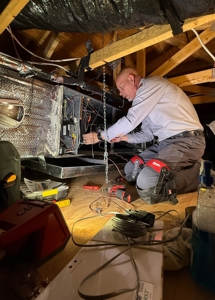
Here is the catch. Artificial intelligence can explain how an HVAC system works, but it cannot stand in your home. It cannot test your equipment, see your ductwork, measure your airflow, or check your refrigerant charge. It cannot smell a burnt contactor, hear a dying motor, or stand in your attic in the summer where temperatures can exceed 140°F to 160°F.
AI is a useful learning tool. It is not a licensed HVAC technician, a diagnostic instrument, or a pricing database; and it is certainly not a substitute for a trained professional walking your property. That distinction is the entire point of this article.
AI Can Explain Symptoms, But It Cannot Diagnose the System
When homeowners go looking for HVAC answers, they usually start by typing a symptom into a search bar:
- “My AC is blowing warm air.”
- “My outdoor unit is running but the inside fan is not.”
- “My AC turns on and off every few minutes.”
- “My thermostat says cooling, but nothing happens.”
- “My house feels humid.”
- “One room is always hot.”
- “My breaker keeps tripping.”
Artificial intelligence will turn any of those symptoms into a tidy list of suspects. Warm air, for example, could mean a dirty filter, a frozen evaporator coil, a failed capacitor, a refrigerant problem, a struggling compressor, a thermostat fault, or restricted airflow. Short cycling could point to an oversized system, a dirty coil, a weak capacitor, a thermostat in a bad location, or a static pressure problem.
That feels helpful. It is not a diagnosis. It is a menu of guesses, often without broader context.
A real diagnosis means narrowing that menu down to one culprit by testing the system in the home, and that is exactly where AI falls short. It can tell you a bad capacitor might be the problem, but it cannot put a meter on the capacitor. It can explain that low refrigerant reduces cooling, but it cannot hook up gauges, find the leak, or check whether the system was charged correctly in the first place. It can mention that poor airflow hurts performance, but it cannot measure static pressure or figure out whether your return side is starved of airflow.
HVAC systems are physical things, and the equipment is only one piece; the home, the ductwork, the electrical supply, the insulation, who lives there, and how the place is used all matter. None of those variables show up in a text box. A competent AC repair service technician in Scottsdale puts real instruments on real components and makes recommendations based on what is happening with the system and within the home. That is the line between diagnosis and educated guessing.
AI Cannot Assess the Home
One of the quieter problems with AI-based HVAC advice is that it pictures your home as a generic box with an air conditioner bolted to the side. Real comfort does not work that way.
A technician must understand the specific house and local context is where the generic view falls apart:
- Scottsdale: Is the house taking heavy sun exposure off a west-facing wall that cooks every afternoon?
- Phoenix: Is it an older home with leaky ductwork and insulation that has quietly given up?
- Paradise Valley: Is it a property with large glass walls, high ceilings, and multiple systems?
- Tempe: Is it a rental where the filters get changed on no schedule?
- Mesa: Does the home have a converted garage or a newer addition the original system never planned for?
- Fountain Hills: Is the house built into a hillside with unusual airflow patterns?
- Chandler and Queen Creek: Is it newer construction with comfort complaints stuck in the upstairs bedrooms?
AI does not know any of this unless somebody tells it, and even then, it cannot confirm a single detail. It cannot walk the property and notice the things that effect comfort:
- Whether pets, kids, or both are loading the system with hair, dust, and dander
- Whether anyone in the house deals with allergies, asthma, or chronic sinus trouble
- Whether rooms are used differently than the builder intended
- Whether high ceilings, big windows, or brutal afternoon sun are working against the system
- Whether filters get changed, and whether the return air sized correctly
- Whether supply registers are buried behind the furniture
- Whether the attic ducts are damaged, leaking, undersized, or held together by optimism
- Whether the real complaint is indoor air quality rather than temperature
Those details change the entire conversation. A house with two dogs, three kids, dusty return grilles, and an allergy sufferer needs a very different plan than a lightly used second home with one quiet system. Someone worried about indoor air quality may need filtration, ventilation, humidity control, or a duct evaluation; not a quick part swap suggested by a server rack three states away.
AI Cannot Take Measurements or Readings
This is the core of it. HVAC diagnosis lives and dies on measurement. A good technician does not stand in front of the condenser, squint thoughtfully, and announce that the capacitor is probably tired. A real HVAC diagnosis runs on readings because data beats guessing every single time.
Here is the short list of things that require a tool in someone's hand, not a prompt in a chat window:
- Amp draw and capacitor testing
- Low voltage and leak testing
- Pressure differential and static pressure testing
- Temperature split testing and Manual J load calculations
- Electrical panel audits and visual inspections
- Duct inspections and refrigerant diagnostics
- Blower performance and contactor testing
- Thermostat communication, drain line, and coil condition checks
- Safety control testing
That list is the job.
Amp draw. Motors and compressors can run well outside their safe range for a while before they quit for good, and a system pulling too much current may still hum along while it slowly cooks itself; the only way to know is to clamp a meter on the wire, which no chatbot has ever managed. Capacitors are the same story: weak ones are everywhere, especially after a Valley summer, but a capacitor is not bad because the internet voted it guilty. It is bad when its measured microfarad reading drifts out of tolerance.
Low voltage problems are sneakier. Thermostats, control boards, contactors, float switches, and transformers all run on control voltage, so a system that refuses to start may have nothing major wrong with it at all; it may just have an interrupted circuit that someone must physically trace.
Refrigerant tells its own tale. it does not get used up like gasoline, so if the charge is low, something is leaking and topping it off without finding the leak is expensive, temporary, and a little foolish.
Airflow gets ignored constantly. Air conditioning is not only about temperature; it is about moving the right volume of air through the system, and restricted airflow quietly damages equipment, raises bills, and creates repeat repairs. Catching it means drilling test ports and reading a manometer. Temperature split, the gap between return air and supply air, only means something once one accounts for filter condition, humidity, charge, and load; the reading without the context is just a number wearing a lab coat.
Sizing has its own math. A Manual J load calculation exists because bigger is not better: an oversized system short cycles, fails to pull humidity out of the air, and wears out early, while an undersized one runs forever and still loses. A defensible load calculation weighs square footage, insulation, windows, orientation, occupancy, and ductwork, none of which AI can gather on its own. The electrical panel is no different. HVAC equipment does not live in a vacuum, so breaker size, wire sizing, disconnects, and code compliance all must match the house, which means opening the panel rather than describing it.
Finally, there is the inspection itself. A chat box cannot find burnt wiring, rodent damage, a cracked drain pan, a disconnected duct, a clogged coil, or an installation done years ago by someone in a hurry. A person standing in the attic can.
The Risk of Treating AI As a Repair Authority
The real danger is not that AI gets something wrong now and then. The real danger is that it sounds confident while being incomplete. It can produce a clean, polished, authoritative-looking answer built entirely on a vague one-line description, and that confidence is contagious.
That is how homeowners end up making expensive mistakes:
- Delaying service. If AI suggests something simple, the homeowner waits, resets breakers, swaps the filter, and keeps running the system. If the real issue is electrical, refrigerant, airflow, or compressor related, that delay just makes the damage worse and the eventual bill bigger.
- Chasing the wrong repair. Someone decides it must be the capacitor because AI listed it first, while the actual fault is a low voltage problem, a failed blower motor, a bad contactor, a restricted coil, or a refrigerant leak. Replacing parts at random is not a repair; it is mechanical roulette.
- Attempting unsafe DIY. HVAC systems involve high voltage, stored electrical charge, refrigerant, gas heat components, and moving parts. Capacitors hold a charge, electrical panels can injure or kill, and gas furnaces are not weekend hobby projects for someone armed with a screwdriver and misplaced confidence.
- Assuming every quote is comparable. One quote includes diagnostic labor, parts, warranty, refrigerant handling, code correction, permits, and proper commissioning. Another reads “install unit” scribbled vaguely on a form. AI cannot tell them apart unless the homeowner feeds it every line item and condition.
- Confusing information with accountability. A chatbot does not warranty the repair, carry insurance, hold a license, or come back when the system dies again. It does not answer the phone when the house hits 91 degrees inside and the situation stops being academic. A real contractor does.
Pricing Is Even Harder For AI
Diagnosis is hard for AI. Pricing is worse. Homeowners ask what a repair should cost for an honest reason: nobody wants to overpay or get played.
The trouble is that HVAC pricing does not sit in a clean public database. Most contractors do not advertise their rates. Some, like Varsity Zone HVAC of Scottsdale, use flat-rate pricing, some bill time and materials, some bundle a warranty, and some do not. Some charge a separate diagnostic fee; others waive it with the repair. Some run lower labor rates and higher parts markup, some cut corners on parts, and some pay trained technicians and carry real insurance while others operate out of a truck and a prayer.
So, when AI searches the web, lands on a national average, and hands you a range, that range may be stale, location-blind, or pulled from an article written to attract clicks rather than reflect what service costs in the Valley.
Operational Cost Factors | Geographic & Environmental Context |
Diagnostic time and technician labor | Local labor market and business overhead |
Parts availability and manufacturer components | Regional climate differences (Phoenix versus the Midwest) |
Warranty coverage and callback risk | Equipment location (rooftop package unit versus closet split) |
Travel, dispatch, and fuel costs | Time of service (normal hours versus an emergency July call) |
Licensing, insurance, and ongoing training | Access difficulty (an open system versus a 140-degree attic) |
Refrigerant handling and safety risk management | Documentation, permits, and code-related modifications |
Here is the part the price-shopping misses: a homeowner who finds a capacitor online for a few dollars assumes the installed price should land near that number. It will not, because the part was never the product. You are paying for a trained person to show up, diagnose the real fault, install the correct part safely, confirm the system works, and stand behind it when it counts. AI is a poor judge of fairness until it has that context, and it almost never does.
Why Online Price Ranges Can Mislead Homeowners
Online price ranges feel useful precisely because they manufacture certainty. A search result claims a repair “should” cost a certain amount, the homeowner sees a higher quote, and the contractor instantly looks like a crook. Sometimes that is true. Usually it is not, because the range left out everything that moves the number:
- Local climate. In Scottsdale, Phoenix, Paradise Valley, Tempe, Mesa, Fountain Hills, Chandler, and Queen Creek, air conditioners work brutally hard. Long cooling seasons, extreme heat stress, and demand spikes during the hottest months all shift parts availability, labor dynamics, and emergency response costs.
- System type. A single-stage split, a variable-speed system, a heat pump, a ductless mini-split, a communicating system, a rooftop package unit, and an aging R-22 system each create very different diagnostic and repair paths.
- Access limitations. A part that is easy to reach on one system is a knuckle-skinning ordeal on another. Equipment on roofs, in tight attics, behind narrow panels, or buried in heavy landscaping costs more time and effort, and time is most of the bill.
- Warranty and scope. One company offers a longer labor warranty, uses original equipment manufacturer (OEM) parts, runs extra testing, and documents the readings. Another offers a cheaper repair with minimal verification. Those are not the same service at two prices; they are two different services.
- Root cause testing. A cheap repair turns expensive fast when the root cause was missed. Replacing a failed part without learning why it failed only restarts the countdown to the next failure.
Fair pricing, then, is not a single number; it is the relationship between scope, quality, risk, professionalism, warranty, and the result you are left holding. AI can help you ask sharper questions about that relationship. It cannot hand you the final answer from a generic prompt.
What AI Can Actually Do Well
None of this means AI is useless. Used well, it is genuinely handy.
It is excellent at translation. Before a service visit, it can turn technical jargon into plain English, so you walk in knowing what a capacitor does, what static pressure means, why a refrigerant leak is not something to ignore, and why a Manual J load calculation matters when you are replacing a system.
It is also good at helping you show up prepared. Ask it to build a list of questions for the technician, such as:
- What specific readings did you take, and what was the measured amp draw?
- Did the capacitor test within manufacturer tolerance, and did you check the low voltage circuit?
- Did you test the temperature split and measure the system static pressure?
- Did you inspect both the indoor and outdoor coils, and did you check for refrigerant leaks?
- Is the existing ductwork hurting comfort or equipment performance?
- Is the system properly sized for the home, and are there indoor air quality concerns tied to pets, allergies, or dust?
- Is repair or replacement the smarter long-term move for this system?
It can also compare two written quotes, if you feed it the details: organizing scope differences, flagging missing information, and pointing out that one proposal includes a warranty, duct modifications, or electrical work the other quietly leaves out. And it makes a fine maintenance teacher; explaining why filters matter, why condenser coils need cleaning, why drain lines clog, and why a seasonal AC maintenance plan beats waiting for the system to quit at the worst possible moment. It can even walk you through comfort upgrades like a smart thermostat installation, zoning, filtration, and ventilation. What it still cannot do is tell you what your specific home needs without field data.
The best use of AI is education and preparation. The worst use is self-diagnosis, unsafe DIY, and price-policing without context.
The Better Way to Use AI Before Calling an HVAC Company
If you want AI on your side before you schedule service, point it at your own observations instead of the diagnosis. Rather than asking what is wrong with your AC, ask it to help you build a clear symptom checklist for the technician. Write down:
- When the problem started, and whether the system is cooling at all
- Whether the indoor blower or the outdoor unit is running
- Whether the thermostat is calling for cooling, and whether any breakers have tripped
- Whether the filter was recently changed, or there is water near the indoor unit
- Whether there are unusual sounds or smells, and which rooms are affected
- Whether pets, children, allergies, or respiratory concerns are part of the home
- Whether utility bills jumped suddenly, or the system has had recent repairs
- Whether the home has seen remodeling, insulation changes, duct changes, or a new thermostat
That information helps the technician and shortens the path to an accurate diagnosis. It also helps you describe the problem clearly instead of offering vague clues that are genuinely hard to interpret.
AI can also help you make sense of the recommendation after the visit. If you receive a written estimate, it can summarize it, list follow-up questions, and flag whether the quote includes diagnostic findings, repair scope, parts, warranty, and next steps. But the technician's field measurements drive the final decision; not a chatbot, not a national average, and not a forum thread written by someone with a username and no license.
What To Look for In a Real HVAC Diagnostic Visit
A good HVAC diagnostic visit should look thorough, and you should be able to watch the technician test rather than guess. The exact steps depend on the complaint, but for a cooling problem it generally includes:
- Confirming thermostat operation and the call for cooling
- Inspecting the air filter and the indoor blower
- Checking the outdoor unit and testing electrical components
- Measuring capacitor health and amp draw
- Evaluating refrigerant indicators and coil condition
- Checking the temperature split and overall airflow
- Looking for visible damage or questionable installation work
For airflow or comfort problems, the technician must look past the equipment to effectively assess the situation. Hot rooms, weak airflow, heavy dust, humidity complaints, and uneven comfort usually call for duct evaluation, static pressure testing, return air review, supply register assessment, an honest look at insulation, and sometimes a load calculation.
For replacement conversations, a responsible contractor does not simply match the old equipment size and call it a day. The company that installed the old system may have sized the system wrong from the start, or the home may have changed through window upgrades, added insulation, or an addition. A proper replacement discussion weighs equipment sizing, system type, airflow, duct condition, electrical requirements, code considerations, thermostat needs, and what you care about.
For indoor air quality concerns, the contractor should ask about pets, allergies, asthma, odors, dust, humidity, filter life, and comfort patterns. The fix might be filtration, ventilation, humidity management, duct sealing, air purification, or simply better maintenance. A product offered without diagnosis is just a box with a sales pitch attached.
Varsity Zone HVAC of Scottsdale provides HVAC services across Scottsdale and the nearby Valley communities, with a focus on clear communication, local expertise, and practical recommendations. The goal is not to make HVAC mysterious; the goal is to make it measurable.
Repair Price Questions Customers Should Ask
If a repair price worries you, do not just ask whether it is expensive. Ask better, more targeted questions:
- What diagnostic tests did you run, and what specific readings did you find?
- Was the failed part tested, or assumed bad on sight?
- Is there a related issue that could make the new part fail again?
- Does the price include a labor warranty, and is the part OEM or universal?
- Does the quote cover everything needed to restore safe, reliable operation?
- Are there code, electrical, refrigerant, airflow, or duct issues behind the recommendation?
A fair price should always arrive with a clear explanation. If a contractor cannot tell you what failed, how they know it failed, what the repair includes, and what happens if the problem returns, that is a real problem on its own.
That said, a higher price is not automatically unfair. A company with licensed technicians, proper insurance, fully stocked trucks, ongoing training, real diagnostic equipment, customer support, written warranties, and genuine accountability will never price like someone doing unverified side work. The cheapest option is fine for a simple adjustment, and ruinously expensive when it misses the root problem entirely.
A professional HVAC company should not hide behind jargon; it should explain its findings in plain language. Customers do not need a graduate course in thermodynamics, but they do deserve to understand the problem, the risk, the options, and the total cost.
Why Local Context Matters in The Valley
HVAC advice that ignores location is incomplete advice. A system in the Phoenix metro faces a completely different workload than a system in a mild coastal climate. Long cooling seasons, dust, monsoon weather, scorching attics, intense sun, and heavy summer runtime all shape how equipment performs and how it fails.
In Scottsdale and Paradise Valley, homes often run large, with multiple systems, high ceilings, significant glass, and complex zoning needs. In Phoenix and Tempe, older homes frequently carry duct leakage, thin insulation, and legacy equipment. In Mesa, Chandler, and Queen Creek, newer homes can still struggle with comfort tied to duct design, sizing, room orientation, or installation quality. Fountain Hills brings its own terrain, exposure, and access puzzles.
Local conditions drive diagnosis, pricing, scheduling, equipment selection, and maintenance strategy. That is why a generic AI answer belongs in the background, not on the throne. The right call for a home in Queen Creek may not match the right call for a home in Old Town Scottsdale. The correct solution for a Paradise Valley home with allergy concerns may not match the right one for a Mesa rental. The correct repair for a neglected Phoenix system will not match the correct repair for a Chandler system with one failed part and otherwise clean operation.
Homes are specific, HVAC systems are specific, and pricing is specific. AI is usually general, and general advice has very real limits.
The Bottom Line: Use AI To Learn, Not to Decide
Artificial intelligence is a helpful tool for explaining technical terms, organizing symptoms, preparing questions, and reviewing a written estimate. Used that way, it makes you a more informed, more confident customer.
What it cannot do is diagnose the repair, inspect the home, or account for pets, children, allergies, dust, air quality, ductwork, equipment condition, electrical safety, airflow, refrigerant behavior, or installation quality. It cannot test amp draw, capacitors, low voltage circuits, refrigerant leaks, pressure differentials, temperature split, static pressure, Manual J load requirements, electrical panels, or any real field condition.
It also cannot reliably decide whether an HVAC price is fair. Pricing depends on scope, testing, parts, labor, warranty, access, risk, overhead, local market conditions, and accountability. Most contractors do not publish full repair pricing, and online ranges leave out the messy real-world details, which makes fair pricing a matter of professional context rather than simple arithmetic.
The smart move is to use AI as a preparation tool, then lean on a qualified HVAC technician for the diagnosis and the repair. Ask better questions, request clear findings, look for measured readings, and compare the full scope of service rather than just the bottom line. Pay attention to warranty, accountability, and whether the contractor can explain the recommendation without burying you in jargon.
For homeowners in Scottsdale, Phoenix, Paradise Valley, Tempe, Mesa, Fountain Hills, Chandler, and Queen Creek, comfort is far too important to leave to guesswork. When the system is not performing, go after real measurements, real diagnostics, and real answers.
AI can help you follow the conversation. It cannot replace the person standing in front of the system with the tools, training, license, and responsibility to fix it. That is not anti-AI; it is simply pro-reality, and reality still runs the air conditioner.
Frequently Asked Questions About HVAC Maintenance
Q: Can AI tell me what is wrong with my air conditioner?
It can list possible causes based on the symptoms you describe, which is useful background. It cannot diagnose the actual fault because diagnosis requires testing the real system in your home. Treat the AI answer as a study guide, not a verdict.
Q: Is it safe to repair my own AC using instructions from AI?
Not really. HVAC systems involve high voltage, stored electrical charge in capacitors, refrigerant, and gas heat components, all of which can injure you or damage the equipment. Minor tasks like changing a filter are fine; anything past that belongs to a licensed technician.
Q: How can I tell if an AC repair quote is fair in Scottsdale?
Do not judge it on the number alone. Ask clarifying questions: What tests were run? What readings were found? Was the failed part was tested or assumed bad? Was the part an OEM part or generic? Is a labor warranty is included? Compare the full scope of two quotes, not just the totals; a cheaper repair that misses the root cause is the expensive one.
Q: Why is my AC blowing warm air?
Common causes include a dirty filter, a frozen evaporator coil, a failed capacitor, low refrigerant from a leak, a struggling compressor, a thermostat fault, or restricted airflow. Any of these is possible, which is exactly why a technician tests the system rather than guess from the symptom.
Q: What is a Manual J load calculation, and do I need one?
It is a calculation that determines the correct size of equipment for your specific home, based on square footage, insulation, windows, orientation, occupancy, and ductwork. You want one before replacing a system, because an oversized unit short cycles and fails to control humidity, while an undersized unit runs constantly and still falls behind.
Q: How often should I change my AC filter in the Phoenix area?
Desert dust is relentless, so most Valley residents should change a standard one-inch filter every 30 to 60 days during heavy cooling season. Homes with pets, allergy sufferers, or ongoing construction dust may need it sooner. A clogged filter strangles airflow and is one of the most common avoidable causes of poor cooling.
Q: Should I repair my air conditioner or replace it?
It depends on the age of the system, the cost of the repair relative to the value of the unit, the refrigerant type, and how it has been maintained. A single failed part on an otherwise healthy system usually points to repair, while repeated failures on aging R-22 equipment usually point to replacement. A proper visit weighs all of it instead of defaulting to the more expensive answer.
Q: Does Varsity Zone HVAC of Scottsdale serve my area?
Yes. Varsity Zone HVAC of Scottsdale provides HVAC services across Scottsdale, Phoenix, Paradise Valley, Tempe, Mesa, Fountain Hills, Chandler, and Queen Creek, with a focus on measured diagnostics, clear communication, and practical recommendations.
Hello, I am Andy Pasterchick, owner of Varsity Zone HVAC of Scottsdale. I proudly serve our community with honest, high-quality HVAC services throughout Scottsdale, Phoenix, Paradise Valley, and the surrounding areas. This guide helps Arizona homeowners determine the limitations and benefits of using AI to assess HVAC issues.