
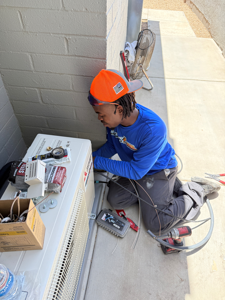
Hello, I am Andy Pasterchick, owner of Varsity Zone HVAC of Scottsdale. I proudly serve our community with honest, high-quality HVAC services throughout Scottsdale, Phoenix, Tempe, Mesa, and the surrounding areas. As summer kicks into high gear, it is the perfect time to discuss how to decide if replacing your HVAC system is a better option than repairing the system.
WHEN IS THE RIGHT TIME TO REPLACE AN HVAC SYSTEM IN THE PHOENIX MARKET?
Phoenix homeowners eventually face a decision that can impact comfort, utility costs, home value, and household finances for years: when is the right time to replace an HVAC system?
In cooler parts of the country, homeowners can often delay replacement decisions because air conditioning is used only a few months each year. In the Greater Phoenix market, the equation is different. Air conditioning is mission-critical equipment. When temperatures climb above 110°F, HVAC systems are not merely comfort appliances; they are essential infrastructure.
For homeowners in Scottsdale, Phoenix, Tempe, Mesa, Paradise Valley, Fountain Hills, Chandler, and Queen Creek, understanding the proper timing for replacement can prevent emergency breakdowns, reduce operating costs, and improve year-round comfort.
WHY HVAC SYSTEMS WEAR OUT FASTER IN ARIZONA
The average HVAC system in Arizona experiences significantly more operating hours than systems in most other regions. While a northern-climate system may operate heavily for only a few months annually, Phoenix-area systems can run continuously from spring through fall.
Several factors contribute to accelerated wear:
Extreme ambient temperatures
- Extended cooling seasons
- Monsoon dust and debris
- Intense UV exposure
- Rooftop installation environments
- Long compressor run times
- High electrical loads
The result is simple: HVAC equipment in Arizona ages faster than comparable equipment in milder climates.
HOW LONG SHOULD AN HVAC SYSTEM LAST IN PHOENIX?
There is no universal answer, but practical expectations are:
0–8 Years: Most systems should be repaired rather than replaced.
8–12 Years: Homeowners should begin evaluating long-term replacement plans.
12–15 Years: Replacement discussions become increasingly relevant.
15–20 Years: Replacement frequently becomes the most economical path.
20+ Years: The system has exceeded normal expectations and should be monitored carefully.
Age alone should never determine replacement. Installation quality, maintenance history, usage patterns, and repair frequency are equally important.
THE BIGGEST MISTAKE HOMEOWNERS MAKE
The most expensive HVAC replacement is often the emergency replacement.
Many homeowners continue repairing an aging system until it fails during a July or August heat wave. Unfortunately, this creates the worst possible purchasing environment:
- Limited time for evaluation
- High seasonal demand
- Reduced contractor availability
- Increased stress
- Less opportunity to compare options
- Strategic replacement almost always produces better outcomes than emergency replacement.
SEVEN MAJOR WARNING SIGNS
- REPAIR FREQUENCY IS INCREASING
Every HVAC system requires occasional service. However, repeated repairs often indicate broader deterioration.
If the same system requires multiple service visits over a two-to-three-year period, replacement should enter the discussion.
- ELECTRIC BILLS KEEP RISING
Homeowners often notice increasing utility bills before noticing comfort issues.
As compressors wear, coils become less effective, and airflow declines, systems consume more energy to produce the same cooling capacity.
- REFRIGERANT PROBLEMS
Large refrigerant leaks can become expensive quickly.
If an older system requires significant refrigerant repairs, replacement frequently provides a better long-term return.
- COMPRESSOR ISSUES
The compressor is the heart of the air-conditioning system.
Compressor replacement on a system that is already fifteen years old is often comparable to installing a new engine in a high-mileage vehicle.
- COMFORT COMPLAINTS
Hot rooms, poor airflow, uneven temperatures, and excessive run times frequently indicate aging equipment or system design deficiencies.
- SUMMER BREAKDOWNS
Repeated summer failures suggest the system is approaching the end of its useful life.
- MAJOR REPAIR EXPENSES
Large repair invoices become increasingly difficult to justify as equipment ages.
THE REPAIR vs REPLACE DECISION MATRIX
A useful framework involves evaluating three variables:
- Equipment age
- Repair cost
- Probability of future repairs
Example A:
8-year-old system - $600 repair
Repair is usually the logical choice.
Example B:
15-year-old system - $3,000 evaporator coil replacement
Replacement deserves serious consideration.
Example C:
18-year-old system - Compressor failure
Replacement is often the stronger financial decision.
SEER2 AND MODERN EFFICIENCY
Many Phoenix-area homes still operate equipment installed when efficiency standards were substantially lower.
Modern SEER2-rated equipment offers:
- Improved energy efficiency
- Variable-speed technology
- Better humidity control
- Reduced temperature swings
- Quieter operation
Homeowners should not replace equipment solely for utility savings. However, when replacement is already justified by age or reliability, improved efficiency becomes an important secondary benefit.
SCOTTSDALE-SPECIFIC CONSIDERATIONS
Scottsdale contains significant housing inventory constructed between the late 1990s and early 2000s.
Many of those original systems are now reaching replacement age.
North Scottsdale homes frequently feature:
- Large square footage
- High ceilings
- Significant glass exposure
- Multiple HVAC systems
These characteristics place additional demands on cooling equipment. For many Scottsdale homeowners, reliability is just as important as efficiency.
PHOENIX CONSIDERATIONS
Phoenix presents a diverse housing stock ranging from historic homes to modern developments.
Many homeowners face challenges involving:
- Aging ductwork
- Older insulation standards
- Legacy HVAC equipment
- Increased cooling demand
A replacement project may create opportunities to improve overall system performance beyond simply replacing equipment.
TEMPE AND MESA
Tempe and Mesa contain large numbers of homes built during major growth periods from the 1970s through early 2000s.
These communities increasingly contain systems entering their second decade of operation.
Property owners should evaluate:
- Repair history
- Utility costs
- Occupant comfort
- Future ownership plans
PARADISE VALLEY
Paradise Valley homeowners often prioritize:
- Reliability
- Comfort
- Quiet operation
- Long-term planning
Luxury homes frequently utilize multiple systems. A proactive replacement strategy can help avoid disruptions during peak summer temperatures.
FOUNTAIN HILLS
Equipment in Fountain Hills often experiences:
- Intense solar exposure
- Elevated rooftop temperatures
- Dust accumulation
These conditions can accelerate outdoor equipment wear.
CHANDLER AND QUEEN CREEK
Many neighborhoods in Chandler and Queen Creek experienced rapid growth during the early 2000s housing expansion.
As a result, a significant number of original systems are now entering replacement cycles.
Homeowners should begin planning before major failures occur.
WHAT ABOUT DUCTWORK?
A new HVAC system can only perform as well as the duct system supporting it.
Common duct issues include:
- Air leakage
- Poor insulation
- Improper sizing
- Restricted airflow
When replacing HVAC equipment, ductwork should be evaluated as part of the overall project.
SMART THERMOSTATS AND SYSTEM UPGRADES
Replacement projects provide an opportunity to modernize controls.
Recommended smart thermostat manufacturers include:
Ecobee: https://www.ecobee.com
Honeywell Home: https://www.resideo.com
Benefits may include:
- Scheduling automation
- Remote access
- Energy monitoring
- Occupancy-based adjustments
HOME VALUE AND RESALE CONSIDERATIONS
HVAC age frequently becomes a discussion point during real estate transactions.
Buyers often view aging equipment as:
- Future expense
- Negotiation leverage
- Potential inspection concern
A recently installed HVAC system rarely returns one hundred percent of its installation cost, but it can improve marketability and reduce transaction friction.
WHAT DOES HVAC REPLACEMENT COST?
Actual pricing depends on:
- Equipment size
- Efficiency level
- Ductwork condition
- Installation complexity
- Electrical upgrades
- Home configuration
- The lowest proposal is not always the best value.
Installation quality often has a greater impact on long-term satisfaction than brand selection alone.
POPULAR EQUIPMENT MANUFACTURERS
Homeowners researching equipment may wish to review:
Trane: https://www.trane.com
Lennox: https://www.lennox.com
Carrier: https://www.carrier.com
Bosch: https://www.bosch-homecomfort.com
Daikin: https://www.daikincomfort.com
Mitsubishi Electric: https://www.mitsubishicomfort.com
The best system is the one that is properly sized, properly installed, and properly maintained.
TEN QUESTIONS TO ASK BEFORE REPLACING
- How old is the current system?
- What is the repair history?
- Are utility costs increasing?
- Is comfort declining?
- Does the system use obsolete refrigerant?
- Is ductwork in good condition?
- How long will the homeowner remain in the property?
- Is financing desired?
- What efficiency level makes sense?
- Is the replacement being planned proactively?
FREQUENTLY ASKED QUESTIONS
How long does an HVAC system last in Scottsdale?
Most systems provide reliable service for approximately 10–15 years, though maintenance quality and installation quality can significantly influence longevity.
Should a 15-year-old air conditioner be repaired?
Sometimes. The decision depends on repair cost, overall condition, and future failure risk.
What is the best month to replace an HVAC system?
October through April often provides the greatest flexibility and the least pressure.
Can a new system lower electric bills?
Yes. Savings vary, but modern systems generally operate more efficiently than older equipment.
Should homeowners wait until failure?
Generally, no. Planned replacement creates more options and reduces stress.
FINAL THOUGHTS
The right time to replace an HVAC system is before the equipment forces the decision.
For homeowners throughout Scottsdale, Phoenix, Tempe, Mesa, Paradise Valley, Fountain Hills, Chandler, and Queen Creek, the optimal replacement window usually occurs when aging equipment begins generating significant repair costs, declining reliability, and rising operating expenses.
The goal is not to replace equipment prematurely. The goal is to replace it strategically.
A replacement completed during a pleasant Arizona winter afternoon is a planned investment.
A replacement completed during a 115-degree July emergency is crisis management.
For homeowners evaluating replacement options in the Greater Scottsdale area, additional information is available at: