
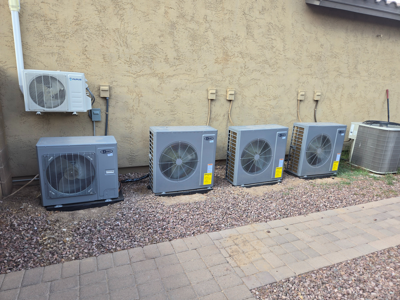
What is a Fair Price for a New Air Conditioner in Today's Market?
Investing in a new heating, ventilation, and air conditioning (HVAC) system is one of the most significant financial decisions you will make for your home. In the Valley of the Sun, where summer temperatures consistently shatter records, an air conditioner is far from a luxury item—it is critical infrastructure required to ensure your health, comfort, and household safety.
If you are looking for a simple, single number for what a new HVAC system should cost in the Phoenix metropolitan area, you will quickly find that straightforward answers are hard to come by. A quick internet search might tell you that a new system costs anywhere from $6,000 to over $22,000. Why is that range so massive? What constitutes a truly "fair" price in our unique desert market? How do you distinguish between an honest contractor charging for structural reliability and a price-gouging corporate franchise or a dangerously cheap, uninsured installer?
This comprehensive market guide breaks down the real cost of HVAC replacement across the entire Valley—from Phoenix and Scottsdale to Paradise Valley, Fountain Hills, Tempe, Chandler, Mesa, Gilbert, and Queen Creek. We will look at every factor, variable, and hidden element that dictates the final invoice, empowering you to make an educated decision without overpaying or falling victim to cut-rate scams.
1. What Dictates a "Fair Price" in the Phoenix Market?
A fair price is not simply the lowest price available. In the residential mechanical service sector, a fair price is an equilibrium point where you, the homeowner, receive high-quality equipment installed to strict manufacturer specifications, backed by an accessible warranty, while the installing company earns enough margin to pay their technicians living wages, maintain proper licensing, cover liability insurances, and stay in business to honor that warranty for the next ten to fifteen years.
In the Phoenix market, standard entry-level, builder-grade HVAC replacements typically start around $7,000 to $9,000. Mid-range, higher-efficiency systems generally run between $9,500 and $14,000. Premium, top-tier variable-capacity systems can easily range from $14,500 to $22,000+ depending on the architectural challenges of the home. To understand where a specific home layout falls on this spectrum, it is necessary to examine the core factors that build these numbers.
The True Cost of Local Specialized Labor
The Phoenix metro area presents some of the most grueling installation environments in the nation. Summer attic temperatures can easily exceed 140°F, creating an environment where a single installation mistake can lead to systemic equipment failure or safety hazards. Installation crews must undergo specialized training to execute precise work—such as brazing copper line sets while purging nitrogen, pulled deep vacuums below 500 microns, and balancing high-voltage distribution electrical arrays safely under brutal physical conditions.
When you pay for a premium installation in Scottsdale, Tempe, or Chandler, a substantial portion of that investment goes directly toward professional labor. A cut-rate estimate often indicates that the company is cutting corners on labor—either by utilizing untrained, uncertified helpers or rushing the installation process to squeeze multiple jobs into a single day, which inevitably leads to premature equipment breakdowns.
Market Demands and Regional Supply Chains
Because our regional climate puts unprecedented stress on cooling systems, the Phoenix market requires robust equipment supply chains. Top manufacturers distribute specific "desert-rated" packages to the Southwest region, designed with enhanced condensers and cooling algorithms to withstand ambient outdoor temperatures up to 115°F or even 120°F without dropping offline due to high-pressure thermal overloads. Ensuring that your quote features equipment verified for our climate is an essential element of a fair price.
2. Core Equipment Factors Influencing Your Estimate
When reviewing an HVAC estimate, the physical equipment accounts for roughly one-third to one-half of the total project cost. The exact specifications of that equipment will pivot the price dramatically.
System Capacity and Sizing (Tonnage)
Residential air conditioners are sized in "tons," which measures the system's cooling capacity. One ton of cooling capacity equals 12,000 BTU (British Thermal Units) of heat removal per hour. Residential systems typically range from 1.5 tons to 5 tons. The mathematical expression for system capacity is simple:
Cooling Capacity (BTUs) = Tonnage × 12,000
A 5-ton system requires larger compressors, larger heat exchanger coils, and more refrigerant than a 2-ton system, naturally escalating the equipment cost. However, a fair contractor will never guess your system size based solely on square footage. They must perform an official Manual J Load Calculation, which factors in your home's insulation levels, window orientations, ceiling heights, and construction materials. Over-sizing a system leads to rapid short-cycling and high indoor humidity, while under-sizing means your home will never reach comfortable temperatures in July.
Energy Efficiency Ratings (SEER2 and EER2)
Efficiency is measured by the Seasonal Energy Efficiency Ratio 2 (SEER2). The higher the SEER2 rating, the lower your monthly electric bill will be, but the higher the initial equipment purchase price.
Baseline Efficiency (13.4 - 14.3 SEER2): These systems meet the minimum federal regulatory requirements for the Southwest region. They have lower upfront costs but will consume more energy during peak summer months in Mesa and Gilbert.
Mid-Tier Efficiency (15 - 17 SEER2): Excellent balance of upfront cost and long-term utility savings. Often includes two-stage compressors that run on a lower, quieter speed during milder days.
High-End Efficiency (18 - 22+ SEER2): These ultra-premium systems feature true variable-speed inverter technology. They adjust their output in 1% increments, maximizing comfort and dropping utility costs, though they command the highest initial investment.
Compressor Technology Types
The type of engine inside your outdoor unit dictates how smoothly your home transitions between temperature variations:
Compressor Type | Operational Behavior | Initial Cost | Comfort Profile |
Single-Stage | On or Off at 100% capacity. Cycles frequently. | Lowest | Standard; experiences slight temperature swings. |
Two-Stage | Runs at ~65% capacity on mild days; kicks into 100% capacity on hot days. | Moderate | High; better humidity control and longer cycles. |
Variable-Speed (Inverter) | Constantly adjusts output between 25% and 100% to match cooling loads perfectly. | Highest | Premium; ultra-quiet, stable temperatures, maximum efficiency. |
3. Installation Variables That Impact the Final Price
Two identical homes in Queen Creek could select the exact same AC unit yet receive installation quotes that differ by thousands of dollars. This variation is driven by the physical and architectural realities of the installation site.
Configuration: Split Systems vs. Package Units
Split Systems: This setup features an outdoor condenser paired with an indoor air handler or gas furnace (commonly located in an attic, garage, or dedicated closet). Replacing a split system requires balancing two major pieces of machinery, flushing or replacing copper line sets, and managing complex condensate drainage setups.
Package Units: Common in single-story homes across Phoenix, these units house all components in one large metal box, typically mounted on the roof. While the equipment itself can be expensive, installation can sometimes be faster because everything is self-contained.
Physical System Location and Accessibility
Where does the unit sit? If your system is located on a steep residential rooftop in Fountain Hills, the crew will have to budget for specialized safety equipment, roofing transition curbs, and advanced rigging. If an indoor air handler is squeezed deep inside a tight attic crawlspace with a small access hatch in a Tempe home, the labor hours required to carefully remove the old system and suspend the new one will naturally increase.
Crane Fees and Rigging Requirements
Rooftop unit swaps require a crane to lift the old 400-pound unit down and drop the new one in place. A reputable HVAC contractor includes crane fees directly in their transparent estimate. Crane rentals require local permits, scheduling coordination, and liability insurance, adding a fixed overhead cost to the installation day.
Air Duct Infrastructure Adjustments
A brand-new, high-efficiency air conditioner connected to crushed, leaking, or undersized ductwork will fail prematurely and perform poorly. A fair price frequently includes minor or major duct remediations, plenum rebuilds, or balancing dampers to ensure the airflow matches the system's output metrics.
4. Brand Deep Dive: Real Market Options
To give you an idea of what premium engineering looks like, let us explore four top-tier manufacturers frequently installed across the Valley. Each offers distinct advantages depending on your home's setup and budget preferences.
Trane HVAC Systems
Often referred to as an industry standard-bearer for reliability, Trane systems are highly valued in harsh desert climates. Their spine-fin outdoor coils provide exceptional heat transfer capabilities, and their structural cabinets are built like tanks to resist intense UV exposure.
For an entry-level to mid-tier solution, homeowners frequently look at the reliable Trane XR14 Single-Stage Air Conditioner. If you are seeking variable-speed climate control to combat extreme summer spikes, the Trane XV20i Variable Speed Air Conditioner represents peak residential comfort engineering.
Carrier HVAC Systems
Carrier is globally recognized for inventing modern air conditioning, and their premium Infinity series features some of the most advanced digital communicating control systems on the market. They are an excellent choice for custom homes in communities like Paradise Valley, where quiet operation and precise zone control are paramount.
Homeowners looking for high-performance efficiency often select the Carrier Infinity 26 Air Conditioner with Greenspeed Intelligence, which offers unparalleled dehumidification and ultra-low decibel sound output. For an outstanding mid-tier option, the Carrier Performance 16 Central Air Conditioner delivers long-term durability.
Lennox HVAC Systems
Lennox specializes in pushing the absolute limits of energy efficiency. Their Dave Lennox Signature Collection features models with SEER2 ratings that lead the industry, making them a preferred choice for homeowners looking to minimize their carbon footprint and reduce their reliance on the local power grid.
The pinnacle of their lineup is the Lennox XC26 Variable-Capacity Air Conditioner, a unit that integrates seamlessly with smart home automation ecosystems and solar energy installations.
Bosch HVAC Systems
Bosch has taken the North American HVAC market by storm by introducing premium, European-engineered inverter technology at an accessible mid-tier price point. Unlike traditional systems where you must pay a massive premium for a variable-speed compressor, Bosch systems utilize smart inverter tech standard across their primary lines, allowing them to match the exact cooling load of your home dynamically.
Their standout offering is the Bosch Inverter Ducted Split (IDS) Family, which pairs beautifully with existing duct systems and provides whisper-quiet operation, exceptional humidity removal, and remarkable efficiency upgrades for homes in Scottsdale and Phoenix.
5. Why You Must Choose a Licensed, Bonded, and Insured Vendor
When looking for an HVAC quote, you will inevitably encounter "side-job Joes" or unlicensed handymen offering to install a system for thousands of dollars less than established companies. Accepting these quotes is an incredibly risky gamble that frequently ends in financial disaster.
CRITICAL RISK: Major manufacturers explicitly state in their warranty terms that equipment parts warranties are completely voided if the system is not installed by a licensed HVAC professional.
What Do These Terms Actually Mean?
Licensed: A licensed contractor has proven their technical competency to state regulators. In Arizona, this means holding an active license with the Arizona Registrar of Contractors (AZROC). They have passed comprehensive legal and trade examinations, verified their clean background records, and demonstrated years of verified field experience.
Bonded: A surety bond provides a layer of financial consumer protection. If a bonded contractor walks away from an uncompleted project, damages your property, or fails to pay for materials, the bonding company provides financial restitution to you, the homeowner.
Insured: A professional contractor carries both General Liability Insurance and Workers' Compensation. General liability protects your home if an accidental fire or water leak occurs during installation. Workers' comp ensures that if a technician injures themselves while lifting heavy machinery into your attic, the insurance company handles their medical needs—not your homeowner's insurance policy.
6. How to Choose the Right HVAC Vendor in the Valley
Selecting the right vendor is even more important than selecting the right equipment brand. A poorly installed premium system will constantly break down, while a perfectly installed standard system can easily run smoothly for 15 years.
Use this systematic checklist when vetting prospective companies across Phoenix, Scottsdale, and the surrounding East Valley:
Verify Status with the AZROC: Before allowing a representative into your home, look up their business name or license number directly on the official AZROC portal. Confirm that their license status is listed as "Active."
Evaluate Quote Transparency: A fair contractor provides a detailed, written proposal that explicitly lists the exact model numbers of both units, the official SEER2 efficiency rating, and all included installation accessories.
Read Reviews and Local Footprints: Look for companies with a robust history of positive reviews on Google and the Better Business Bureau (BBB) who actively serve your specific community—whether that's Queen Creek, Mesa, or Fountain Hills.
Require a Comprehensive Home Evaluation: Avoid any company that attempts to quote a system replacement over the phone without visually inspecting your home's structural layout, electrical panel capacity, and duct integrity.
Frequently Asked Questions (FAQs) About Phoenix HVAC Pricing
How long does a typical AC system last in the Phoenix desert climate?
Due to our extreme summer heat index, residential systems in the Phoenix metro area typically last between 10 to 14 years. Systems that receive professional biannual preventative maintenance lean toward the higher end of that range, while neglected units often fail prematurely around year 8 or 9.
Are federal tax credits and local utility rebates still available for new HVAC installs?
The incentive landscape has shifted drastically. The old federal 25C tax credit for new residential installations has officially expired. Locally, following recent Arizona Corporation Commission structural decisions, major utilities like APS have rolled back or discontinued several commercial and new-home builder programs. While some baseline residential equipment credits still exist depending on your exact utility, the largest active incentives are now tied directly to the state's new Efficiency Arizona program, which offers up to $8,000 for high-efficiency heat pumps but is strictly restricted based on household income qualifications. Always verify current program status before assuming a rebate applies to your quote.
Why may HVAC quotes vary so drastically between different companies?
A company's pricing structure is heavily dictated by the overall size of the shop and its overhead requirements. Massive "mega-shops" with immense structural overhead, massive physical truck fleets, and aggressive multi-media advertising campaigns inherently carry higher baseline operational costs. On the other end of the spectrum, mid-sized companies backed by recognized national resource systems often operate at a much lower, leaner overhead threshold. This structural efficiency allows them to price their projects highly competitively—frequently sitting on the accessible lower end of the middle-tier market—while still providing bulletproof warranty support and elite parts availability.
Should I replace both my outdoor condenser and indoor coil at the same time?
Yes, absolutely. HVAC systems are engineered to work as matched pairs. Connecting a brand-new R-410A or low-GWP outdoor unit to an old, worn-out indoor coil severely penalizes the system’s efficiency, violates regional SEER2 building codes, and voids the manufacturer’s structural warranty.
The HVAC Buying Checklist for Valley Homeowners
AZROC Verification: Did you verify their active license on the AZROC website?
Load Calculation: Did the contractor perform a structural volume check or load calculation?
Comprehensive Quote: Does the written proposal explicitly detail model numbers and SEER2 ratings?
Permits & Regulations: Does the quote include municipal building permit fees (if required) and structural crane fees?
Warranty Protection: Does the proposal clearly outline the 10-year manufacturer parts warranty?
Hello, I am Andy Pasterchick, owner of Varsity Zone HVAC of Scottsdale. I proudly serve our community with honest, high-quality HVAC services throughout Scottsdale, Phoenix, Tempe, Mesa, and the surrounding areas. As our intense summer heat puts local air conditioners to the test, many homeowners are asking themselves what it actually costs to replace an aging unit. Today, we are pulling back the curtain on the Valley market to look at what a truly fair price looks like—and how to ensure you get real, long-term value for your investment.