Heating Services We Provide
The work a heating system needs depends on the equipment, its condition, and the problem you are trying to solve.
Heating repair: When a furnace or other heating system develops a fault, diagnosis helps identify what is preventing normal operation. For furnace-specific problems, our furnace repair services cover corrective diagnosis and repair.
Heating replacement and installation: Repeated failures, major component damage, equipment condition, or changing heating needs can make replacement worth evaluating. Our furnace replacement services cover assessment, sizing, equipment selection, installation, and startup for furnace systems.
Heating maintenance: Preventive care gives technicians an opportunity to inspect equipment, check operating conditions, clean applicable components, and identify developing problems. Our furnace maintenance services focus on planned furnace care and seasonal readiness.
Heating Systems and Equipment
Heating systems do not all create heat in the same way. The equipment type affects the components, controls, safety checks, diagnostics, and maintenance involved.
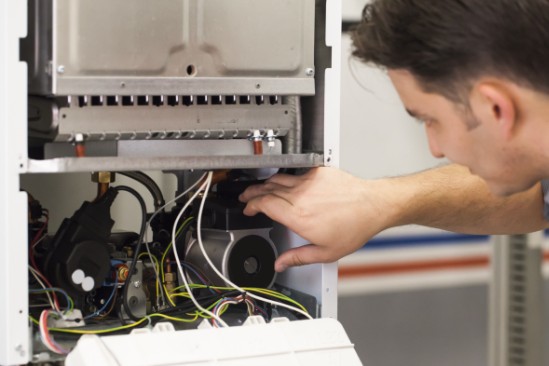
- Gas furnaces: Forced-air furnaces can use burners, a heat exchanger, an inducer, a blower, venting, ignition components, and safety controls.
- Electric furnaces: Electric furnaces use electric resistance heating elements, electrical controls, safety limits, and a blower rather than combustion components.
- Heat pumps: Heat pumps transfer heat through a refrigerant circuit and can provide both heating and cooling.
- Ductless heat pumps: Ductless systems can heat individual rooms or zones without a traditional central duct system.
- Packaged and combined systems: Some properties use packaged equipment or systems that combine more than one heating technology or energy source.
Common Heating Problems
The same customer symptom can come from different parts of a heating system, so inspection and testing matter before repair is recommended.
- No heat or insufficient heat: Possible causes vary by system and can involve ignition, heating elements, refrigerant operation, controls, airflow, or equipment faults.
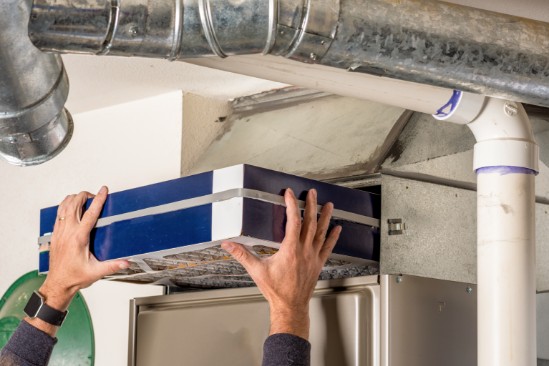
- Weak airflow: Filters, blower components, air handlers, duct restrictions, and controls can reduce the amount of heated air reaching the space.
- Short cycling or long runtimes: Controls, airflow, equipment sizing, safety limits, building heat loss, and system faults can affect how long heating equipment runs.
- Thermostat or control problems: Wiring, sensors, thermostat settings, control boards, and equipment compatibility can affect when and how the heating system operates.
- Unusual sounds or smells: Mechanical, electrical, airflow, or combustion-related conditions can change the way heating equipment sounds or smells.
Heating Safety and System Condition
Heating safety depends on the type of equipment. Gas-fired furnaces have combustion, venting, ignition, flame, and heat-exchanger conditions that do not apply to electric furnaces or heat pumps. Electric systems have their own electrical and control requirements.
Gas odors, smoke, suspected carbon monoxide, or dangerous electrical conditions should not be treated as routine maintenance issues. Leave the affected area when appropriate and follow emergency guidance from the relevant utility, emergency service, or safety authority.
No heat, uneven rooms, or a system that keeps shutting down? Call (833) 894-8221 or request an appointment. We’ll find out what is affecting your heating and recommend the right service for the system.
How Heating Systems Produce and Deliver Heat
Furnaces, heat pumps, and electric heating equipment use different methods to warm a building. Forced-air furnaces heat air and use a blower and duct system to distribute it. Heat pumps move heat through a refrigerant circuit. Electric resistance equipment converts electrical energy directly into heat.
Whatever the heat source, comfort also depends on airflow, controls, equipment capacity, duct condition, thermostat response, and the building itself.
Heating Diagnostics and Performance Checks
The checks used during a heating appointment depend on the system and the symptoms. A technician may inspect or measure:
- Thermostat operation and control signals
- Supply and return air temperatures
- Airflow and static pressure where appropriate
- Blower and motor operation
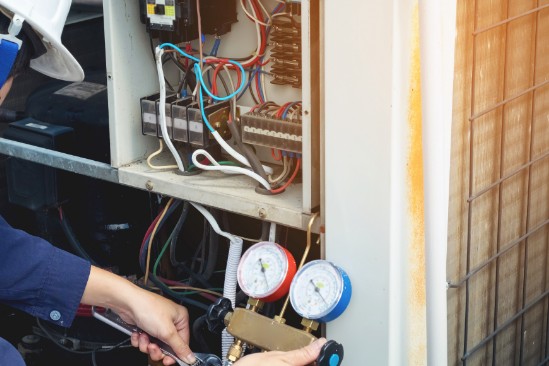
- Voltage, current, wiring, and electrical connections
- Ignition and flame-sensing components on applicable furnaces
- Burner operation, venting, and combustion conditions where applicable
- Safety switches and limit controls
- Heat-pump refrigerant and defrost operation where applicable
- System startup, cycling, and shutdown behavior
Testing should follow the equipment type and the condition being investigated. A heat pump, gas furnace, and electric furnace do not require the same diagnostic process.
Airflow, Thermostats, and Heating Controls
Heating equipment relies on more than the heat source itself. Blowers, filters, ducts, thermostats, sensors, control boards, and safety controls all influence how heat reaches the rooms and how the system responds to demand.
Poor airflow can limit heat delivery even when the heating equipment is producing heat. A control problem can also make a healthy system start at the wrong time, cycle incorrectly, or fail to respond. Compatible smart thermostat controls may add scheduling or connected features, but the thermostat still needs to match the HVAC equipment and control requirements.
Heating Efficiency and Comfort
Heating efficiency is affected by equipment condition, system design, airflow, controls, maintenance, installation quality, thermostat settings, outdoor conditions, and the building envelope. A high-efficiency unit cannot compensate for every airflow, duct, control, or building problem.
Heating equipment should also be evaluated using the rating that applies to that system. Furnaces commonly use AFUE ratings, while heat pumps use different heating and cooling performance metrics.
Heating Problems That May Need Urgent Attention
- Gas odor: A suspected gas leak requires immediate safety action rather than ordinary heating troubleshooting.
- Carbon monoxide alarm: Leave the affected area and follow the alarm manufacturer’s and local emergency guidance.
- Smoke or burning electrical smell: Stop using the equipment when it is safe to do so and seek appropriate help.
- Repeated breaker trips: Repeated electrical trips can indicate a fault that should be checked before continued operation.
- Complete loss of heat: No-heat situations can become urgent during severe cold or when occupants or property are particularly vulnerable to low temperatures.
Emergency and after-hours service availability varies by location.
Frequently Asked Questions About Heating Services
What type of heating is best for a house?
The best heating system depends on the home, climate, available energy sources, existing ductwork, comfort needs, and budget. Furnaces, heat pumps, ductless systems, and other heating options each suit different properties, so the right choice starts with the building and the way it will be used.
What heating system do I have?
A forced-air furnace usually heats air and sends it through ducts and vents. A heat pump also uses indoor and outdoor equipment but can provide both heating and cooling. Ductless systems use one or more wall, ceiling, or floor-mounted indoor units, while hydronic systems distribute heat through hot water or steam. Equipment labels, thermostat settings, and the type of indoor and outdoor units can also help identify the system.
What heating system is most efficient?
There is no single system that is most efficient for every property. Efficiency depends on the equipment, climate, fuel or energy source, system sizing, installation, controls, maintenance, and the building itself. Comparing the applicable efficiency ratings and the full system setup gives a more useful picture than choosing by equipment type alone.
What is forced-air heating?
Forced-air heating uses a blower to move heated air through ductwork and into rooms through supply vents. Furnaces commonly use this type of distribution, and some heat-pump systems also use ducted forced air.
Who repairs home heating systems?
HVAC technicians diagnose and repair heating systems such as furnaces, heat pumps, and other compatible heating equipment. The work can involve controls, airflow, electrical components, ignition or combustion parts on applicable systems, and other equipment-specific components.
How does a home heating system work?
Home heating systems either create heat or move heat into the building, then distribute it through air, water, or another system. Furnaces create heat and typically use a blower and ductwork to deliver it. Heat pumps transfer heat through a refrigerant circuit, while other systems may use electric resistance or hydronic distribution.
Related Heating & HVAC Services







.2407151135103.png) Family Of Brands
.2408271115453.png "Groovy Hues")